
Why So Many People Struggle to Keep Succulents Alive Indoors
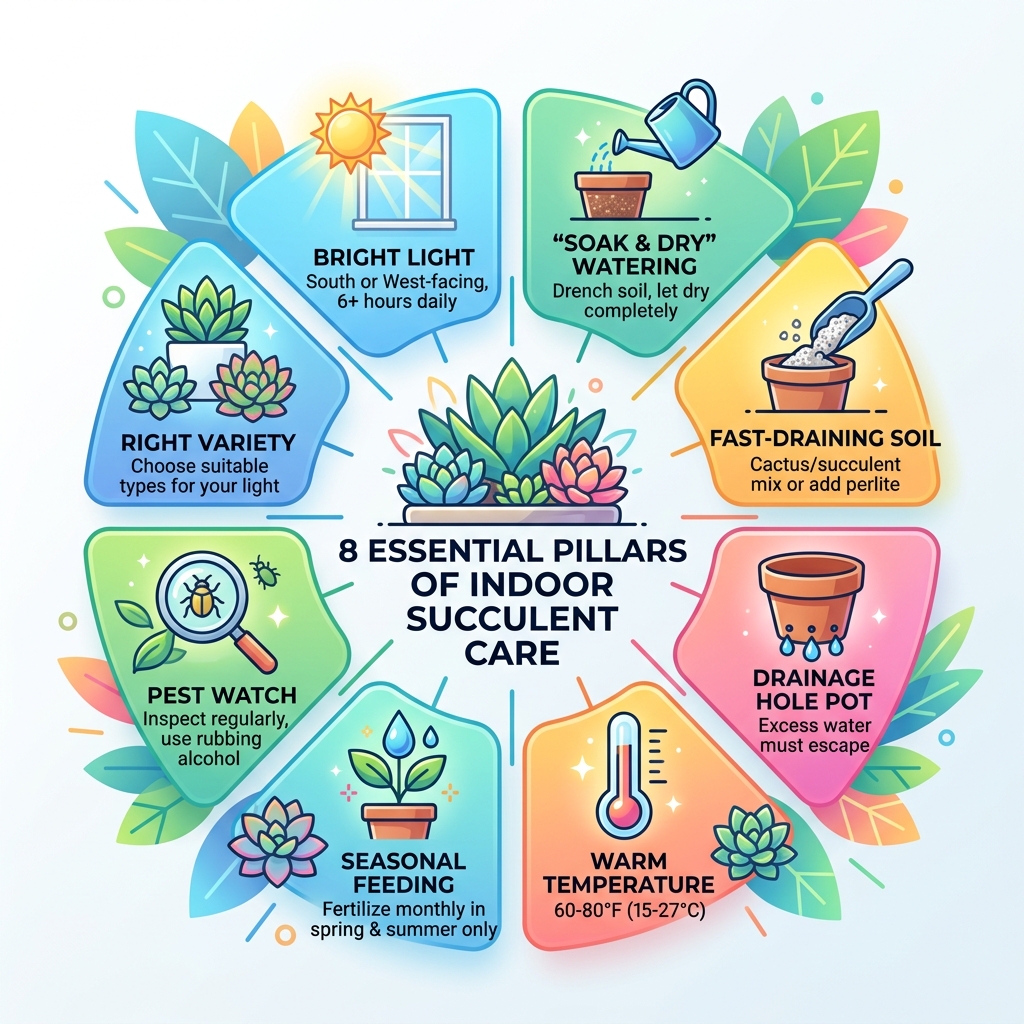
How to keep succulents alive indoors comes down to a few core habits: the right light, the right watering method, and the right soil. Here’s the short version:
- Light: Place in a south- or west-facing window for at least 6 hours of bright light daily
- Water: Use the “soak and dry” method — water deeply, then wait until soil is completely dry before watering again
- Soil: Use a fast-draining cactus mix or add perlite/pumice to regular potting soil
- Pot: Always use a container with drainage holes — terracotta is ideal
- Temperature: Keep between 60-80°F and away from drafts or heaters
- Fertilizer: Feed once a month in spring and summer only
- Pests: Check regularly and treat with rubbing alcohol if needed
- Varieties: Choose green types like Haworthia or Gasteria for lower-light spaces
Succulents come from harsh, dry environments — deserts, rocky hillsides, and sun-baked plains across Central America, South Africa, and beyond. They survive drought by storing water in their thick, fleshy leaves and stems. That’s what makes them so appealing as houseplants.
But here’s the catch: most homes don’t come close to mimicking those conditions.
Low light, overwatering, and dense soil are the three most common reasons succulents die indoors — and they’re all easy to fix once you know what to look for. With over 10,000 types of succulents in existence, picking the right variety for your space matters just as much as how you care for it.
The good news? You don’t need a green thumb. You just need the right information.
Master the Light: How to Keep Succulents Alive Indoors
Light is the fuel that powers every succulent’s growth. In their native habitats, these plants often soak up 6 to 12 hours of direct, intense sun. Indoors, we have to work a bit harder to meet those needs. To truly understand Sunlight Requirements for Indoor Succulents, we must look at the orientation of our homes.
For most varieties, a southern-facing window is the “Goldilocks” spot. It provides the most consistent, bright light throughout the day. Western exposure is a close second, though the afternoon sun through a west window can sometimes be intense enough to scorch delicate leaves. If you are using an eastern window, your plants will get great morning light, but they might need a little extra help to reach that 6-hour minimum.
We recommend rotating your pots a quarter turn every few days. Succulents are naturally phototropic, meaning they grow toward the light. If you don’t rotate them, they’ll start leaning like they’re trying to escape out the glass, leading to a lopsided plant. If you want to dive deeper into positioning, check out our guide on Sunlight Requirements for Indoor Succulents 2.
Signs You Need to Change How to Keep Succulents Alive Indoors
How do you know if your plant is unhappy with its lighting? Succulents are very vocal, though they speak in “plant language.” The most common cry for help is etiolation—more commonly known as stretching or becoming “leggy.”
When a succulent doesn’t get enough light, it enters a survival mode where it rapidly grows taller, increasing the space between leaves to “reach” for the nearest light source. You might also notice:
- Color Fading: Vibrant reds, purples, and oranges turn back to a dull green or even a pale white.
- Flattening Leaves: Rosette-shaped plants like Echeveria may flatten their leaves downward to increase surface area for light absorption.
If your plant is already looking like a beanpole, don’t panic. While you can’t “shrink” the plant back down, you can fix the underlying issue. We’ve put together a resource on How to Prevent Succulent Stretching Indoors a Detailed Guide and its follow-up, How to Prevent Succulent Stretching Indoors a Detailed Guide 2, to help you navigate this common hurdle.
Using Artificial Grow Lights
Sometimes, a sunny window just isn’t enough, especially during dark winter months or in basement apartments. This is where artificial grow lights become a game-changer. Modern LED grow lights are energy-efficient and provide the specific full-spectrum light succulents crave.
For indoor success, we suggest keeping grow lights on for 10 to 14 hours a day to compensate for the lower intensity compared to the sun. Keep the lights about 6 to 12 inches away from the plants; if they are too far, the plant will still stretch, but if they are too close, the heat could cause “sunburn” patches. For more technical tips, explore our Indoor Cactus and Succulent Care Tips.
Perfecting the “Soak and Dry” Watering Method
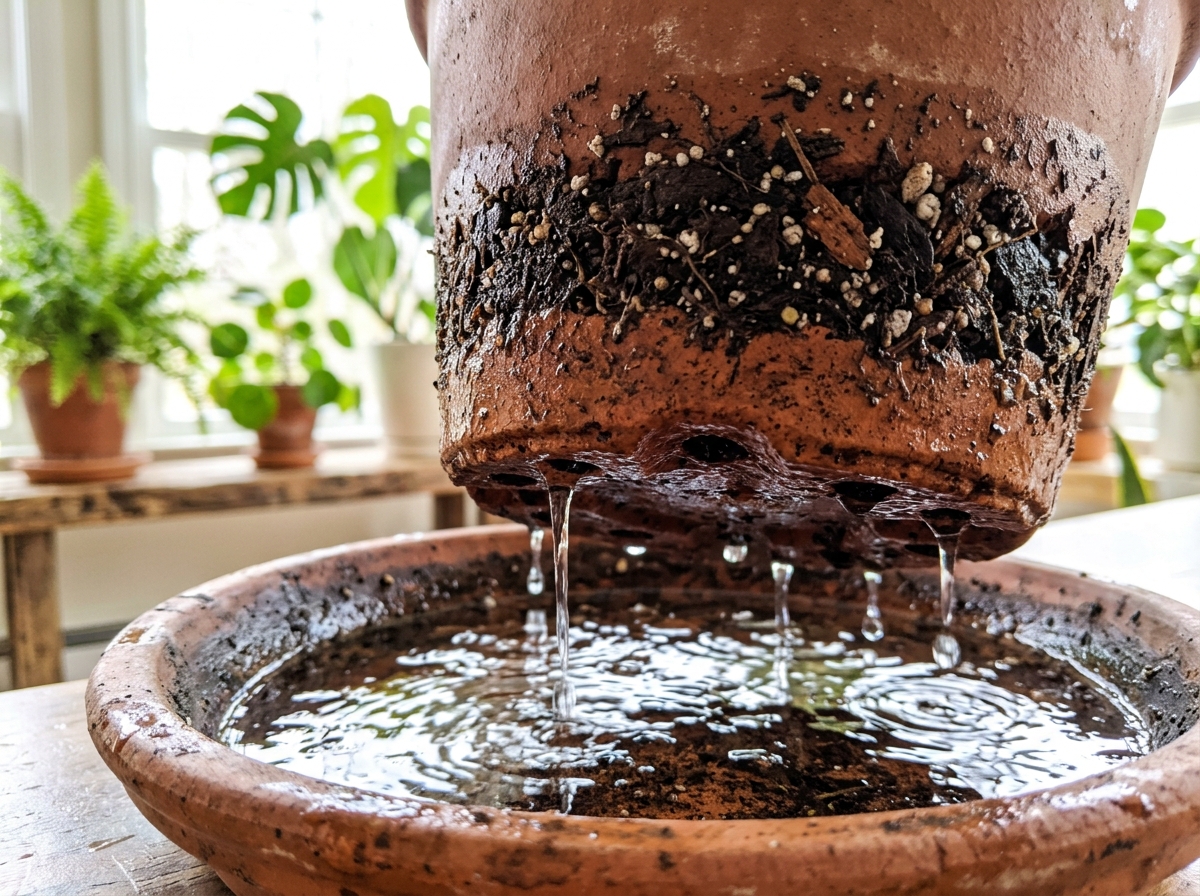
Watering is where most “black thumbs” are born. The biggest mistake beginners make is watering a little bit every day. In the desert, it rarely rains, but when it does, it pours. We need to mimic this cycle.
The “soak and dry” method is our gold standard. You should drench the soil until water runs freely out of the drainage holes at the bottom of the pot. Then—and this is the hard part—you leave it alone. Do not water again until the soil is bone-dry all the way through. You can test this by sticking your finger two inches into the soil or using a wooden chopstick; if it comes out clean and dry, it’s time for a drink.
Establishing a consistent Indoor Succulent Watering Schedule is helpful, but “consistent” doesn’t mean “frequent.” Depending on your home’s humidity and the season, you might water once a week in summer and only once a month in winter. Avoid these Indoor Succulent Watering Mistakes to Avoid to keep your roots healthy.
Identifying Overwatering vs. Underwatering
It can be confusing because both overwatered and underwatered plants can look “sick,” but the symptoms are distinct:
- Overwatered: The leaves will look yellow, translucent, and feel mushy or “soggy” to the touch. They may fall off at the slightest bump. This is a precursor to root rot.
- Underwatered: The leaves will look wrinkled, shriveled, and may feel leathery. Usually, the bottom leaves are affected first as the plant consumes its own water stores.
If you suspect you’ve been too heavy-handed with the watering can, read our guide on How to Revive Overwatered Succulents an Informative Guide. If the stem has turned black or soft, you might be dealing with Root Rot in Succulents Causes and Solutions, which requires immediate surgery (cutting away the rot) to save the plant.
The Danger of Misting
We often see people misting their succulents with a spray bottle. While this works for tropical ferns, it’s a recipe for disaster for succulents. Misting increases humidity around the leaves, which can lead to fungal growth and rot. Furthermore, succulents have “fine” roots that need deep water to grow downward; misting only wets the surface, encouraging weak, shallow root systems. If your plant is looking sad, misting isn’t the answer—instead, look at How to Revive a Drooping Succulent for better recovery strategies.
Choosing the Right Foundation: Soil and Containers
You wouldn’t try to run a marathon in heavy winter boots, and a succulent shouldn’t try to grow in heavy, moisture-retaining garden soil. Most store-bought potting soils are peat-based, which is designed to hold onto water—the exact opposite of what a succulent wants.
The Best Soil for Indoor Succulents is a gritty, well-draining mix. Look for bags labeled “Cactus and Succulent Soil.” These usually contain a mix of organic matter and inorganic “grit” to allow for maximum airflow to the roots.
The container is just as important as the soil. We always advocate for the Best Pot for Indoor Succulents: a pot with a drainage hole. Terracotta is a favorite because the clay is porous, meaning it actually “breathes” and helps pull excess moisture out of the soil.
DIY Soil Amendments
If you only have regular potting soil on hand, you can easily “succulent-proof” it. We recommend a 1:1 ratio of potting soil to a drainage agent. Common amendments include:
- Perlite: Those little white “Styrofoam-looking” bits that provide excellent aeration.
- Pumice: A volcanic rock that holds some nutrients but allows water to flush through.
- Coarse Sand: Not beach sand (which is too fine), but builder’s sand.
Adding these prevents the soil from compacting and suffocating the roots. For more recipes, check out Best Soil for Indoor Succulents 2.
Why Glass Terrariums Fail
While they look stunning on Pinterest, glass terrariums are often “death traps” for succulents. Glass lacks drainage holes, meaning any excess water sits at the bottom, creating a stagnant pool that breeds bacteria and rot. Furthermore, the high sides of a glass bowl trap humidity and restrict airflow. This “greenhouse effect” can actually cook your plants if they are placed in a sunny window. If you’re seeing issues with a plant in a glass container, see our troubleshooting guide on Indoor Succulent Growth Problems and Solutions.
Selecting the Best Varieties for Indoor Success
Not all succulents are created equal when it comes to living indoors. A general rule of thumb: Green is Good. Varieties that are naturally bright green tend to be more tolerant of the lower light levels found inside our homes.
| Feature | Green Succulents (Indoor Champs) | Colorful Succulents (Sun Seekers) |
|---|---|---|
| Light Need | Low to Moderate | High / Direct Sun |
| Tolerance | High | Low (Stretch easily) |
| Examples | Haworthia, Snake Plant, Gasteria | Echeveria, Graptosedum, Sedum |
Some species, like the Haworthia, have evolved translucent leaf windows on their leaf tips. These “windows” allow sunlight to penetrate deep into the plant’s tissue, helping them thrive even in shadier spots. For more variety ideas, check out Top Succulent Varieties for Low Light and our list of Low Maintenance Indoor Succulents.
Top 10 Beginner Plants
If you’re just starting your collection, we recommend these “unkillable” favorites:
- Snake Plant (Sansevieria): The ultimate low-light warrior.
- Jade Plant (Crassula ovata): A classic that can live for decades.
- Zebra Plant (Haworthia fasciata): Beautiful stripes and very hardy.
- Aloe Vera: Useful for burns and very resilient.
- Panda Plant (Kalanchoe tomentosa): Fuzzy leaves that kids love.
- Ponytail Palm: Actually a succulent, not a palm!
- Gasteria: Slow-growing and very shade-tolerant.
- Burro’s Tail: Great for hanging baskets.
- Christmas Cactus: Loves indoor humidity more than other succulents.
- ZZ Plant: Technically a succulent-like aroid, it’s nearly indestructible.
Find more details in our Top 10 Indoor Succulent Plants or see what works best for Succulent Varieties for Small Apartments.
Pet-Safe Options
If you have curious cats or dogs, safety is a priority. While many succulents are harmless, some (like Jade or Aloe) can cause stomach upset if ingested. Haworthia and Echeveria are generally considered non-toxic and safe for furry friends. Always double-check our Indoor Succulent Care Tips for Beginners for updated safety lists.
Seasonal Care and Troubleshooting Common Problems
Indoor succulents prefer temperatures between 60°F and 80°F. While they can handle hotter days, they really appreciate a “cool down” at night, which mimics the desert floor. One thing they hate? Drafts. Keep your plants away from air conditioning vents in the summer and frosty window panes or heaters in the winter.
Good airflow is also vital. Stagnant air allows pests to settle in and moisture to linger on the leaves. If your plants are crowded together, consider giving them some “personal space” or running a small fan occasionally. For a deep dive into health, see Indoor Succulent Pests and Treatments Keep Your Green Friends Healthy and Combatting Common Succulent Diseases a Practical Guide.
Winter Strategies for How to Keep Succulents Alive Indoors
In the winter, most succulents enter a state of dormancy. Their growth slows down significantly, and their water needs plummet. We recommend reducing watering to once every 4-6 weeks during this period.
Crucial Tip: Never fertilize in the winter. Feeding a dormant plant can lead to weak, “stretched” growth that ruins the plant’s shape. Keep them in the brightest spot you have and let them rest. More winter-specific tips can be found in Indoor Succulent Care During Winter.
Dealing with Mealybugs and Gnats
Pests are an unfortunate part of plant parenthood. The two most common indoor invaders are:
- Mealybugs: These look like tiny bits of white cotton hiding in the nooks and crannies of your plant. They suck the sap and weaken the succulent. Treatment: Dab them with a cotton swab dipped in 70% rubbing alcohol.
- Fungus Gnats: Small black flies that hover around the soil. They are usually a sign that your soil is staying too wet. Treatment: Let the soil dry out completely and use yellow sticky traps.
For persistent issues, explore Indoor Succulent Pests and Treatments Keep Your Green Friends Healthy 2 or our guide on Causes and Treatments for Indoor Succulent Pests.
Advanced Care: Propagation, Repotting, and Feeding
One of the coolest things about succulents is their ability to “clone” themselves. Propagation is essentially free plants!
- Leaf Cuttings: Gently twist a healthy leaf off the stem. Ensure it’s a “clean pull” with no part of the leaf left on the stem. Let it dry (callous) for 2-3 days, then lay it on top of succulent soil. Mist lightly every few days until roots and a “baby” plant appear.
- Stem Cuttings: If a plant is too leggy, you can “behead” it. Cut the top off, let the stem dry, and stick it back into the soil. It will grow new roots!
Learn the nuances in How to Propagate Succulents Indoors and How to Prune Indoor Succulents.
When and How to Repot
Succulents don’t mind being a little bit rootbound—it actually mimics the tight rocky crevices they grow in naturally. However, if you see roots growing out of the drainage hole or if the plant has stopped growing entirely, it’s time for a new home.
Choose a pot only 1-2 inches wider than the current one. Use fresh substrate to replenish nutrients. We’ve broken this down in Repotting Indoor Succulents Step by Step.
Fertilizing for Growth
While succulents are slow eaters, a little snack during the growing season (spring and summer) goes a long way. Use a balanced, water-soluble fertilizer diluted to half-strength. We recommend feeding once a month or every 3-4 waterings. Avoid high-nitrogen fertilizers, which can cause “soft” growth that is prone to pests. Start your schedule with How to Fertilize Succulents Indoors and How to Fertilize Succulents Indoors 2.
Frequently Asked Questions about Indoor Succulents
Why are my succulent leaves falling off?
If it’s just one or two bottom leaves, don’t worry—that’s the natural lifecycle. The plant is just making room for new growth. If healthy leaves from the middle or top are falling off, it’s almost always a sign of overwatering or a sudden temperature shock.
Can succulents survive in a room without windows?
In short, no. Succulents need light to photosynthesize. However, they can survive in a windowless room if you provide a high-quality, full-spectrum LED grow light for at least 12 hours a day.
How do I fix a leggy succulent?
You can’t “un-stretch” a plant, but you can restart it. Cut the healthy top off (leaving about an inch of stem), let it callous for a few days, and replant it in fresh soil. This is often called “beheading” and is a great way to refresh an old collection.
Conclusion
At Finance Foxx, we believe that bringing nature indoors shouldn’t be a source of stress. Succulents are incredibly resilient houseplants; they are designed to survive neglect, but they struggle with “too much love” (usually in the form of too much water).
The key is observation. Look at your plants once a week. Are the leaves firm? Is the color vibrant? Is the soil dry? By mastering the 8 tips we’ve discussed, you can turn your home into a thriving indoor oasis. If you find yourself with a plant on its last legs, don’t give up! Check out Saving Your Dying Indoor Succulent a Comprehensive Guide or Saving a Dying Succulent a Guide for Indoor Plant Lovers.
Ready to become a pro? Learn more about plant maintenance and keep your green friends happy for years to come!
