
The Bright Light Guide to Thriving Indoor Pencil Cacti
What You Need to Know About Pencil Cactus Indoor Care
Pencil cactus indoor care is surprisingly simple once you understand a few key rules. Here’s the quick version:
- Light: 6-8 hours of direct sun daily, ideally near a south-facing window
- Water: No more than once every 10 days during the growing season; much less in winter
- Soil: Fast-draining cactus or succulent mix in a pot with drainage holes
- Temperature: 65-75°F; never let it drop below 50°F
- Safety: The milky white sap is toxic — always wear gloves when handling
The pencil cactus (Euphorbia tirucalli) is one of those rare plants that looks like it belongs in a design magazine but asks almost nothing from you in return.
Its tall, slender, coral-like stems create a striking architectural shape that works beautifully in modern living spaces. And because it stores water in its stems, it handles neglect far better than most houseplants. Forget to water it for two weeks? It’ll be fine.
Indoors, it can grow up to 6 feet tall under the right conditions — a genuine statement piece for any room with a bright window.
But there’s one thing you should know upfront: this plant produces a milky latex sap that is toxic to humans and pets. It can cause serious skin and eye irritation on contact. So while it’s low-maintenance, it does demand respect when you handle it.
This guide covers everything you need to grow a healthy, thriving pencil cactus indoors — safely.

Understanding the Euphorbia tirucalli: More Than Just a Name
Despite its common name, the pencil cactus is not a true cactus. It belongs to the Euphorbiaceae family, making it a cousin to the festive Poinsettia. Originally hailing from the semi-arid regions of Africa and Madagascar, this plant has adapted to survive in harsh, dry environments. In its native habitat, it can reach a staggering 30 feet in height, though indoors it typically matures around 6 feet with a 2-foot spread.
As a stem succulent, it has evolved a unique way to survive: it performs photosynthesis primarily through its green, pencil-thin stems rather than leaves. While you might see tiny, flicker-like leaves on new growth, these usually drop off quickly, leaving behind the smooth, architectural skeleton the plant is famous for.
One of the most sought-after cultivars is the “Fire Sticks” or “Sticks on Fire” variety. While the standard Euphorbia tirucalli remains a deep, vibrant green, the Fire Sticks version turns brilliant shades of yellow, orange, and coral-red when exposed to bright light and cooler temperatures. This color change is a protective stress response that creates a stunning visual display in your home. If you are looking for indoor-succulent-plants-for-low-maintenance, the pencil cactus is a top-tier contender. For those interested in the botanical history of this species, the Pencil Tree Research Guide provides a deep dive into its origins.
Essential Pencil Cactus Indoor Care: Light and Temperature
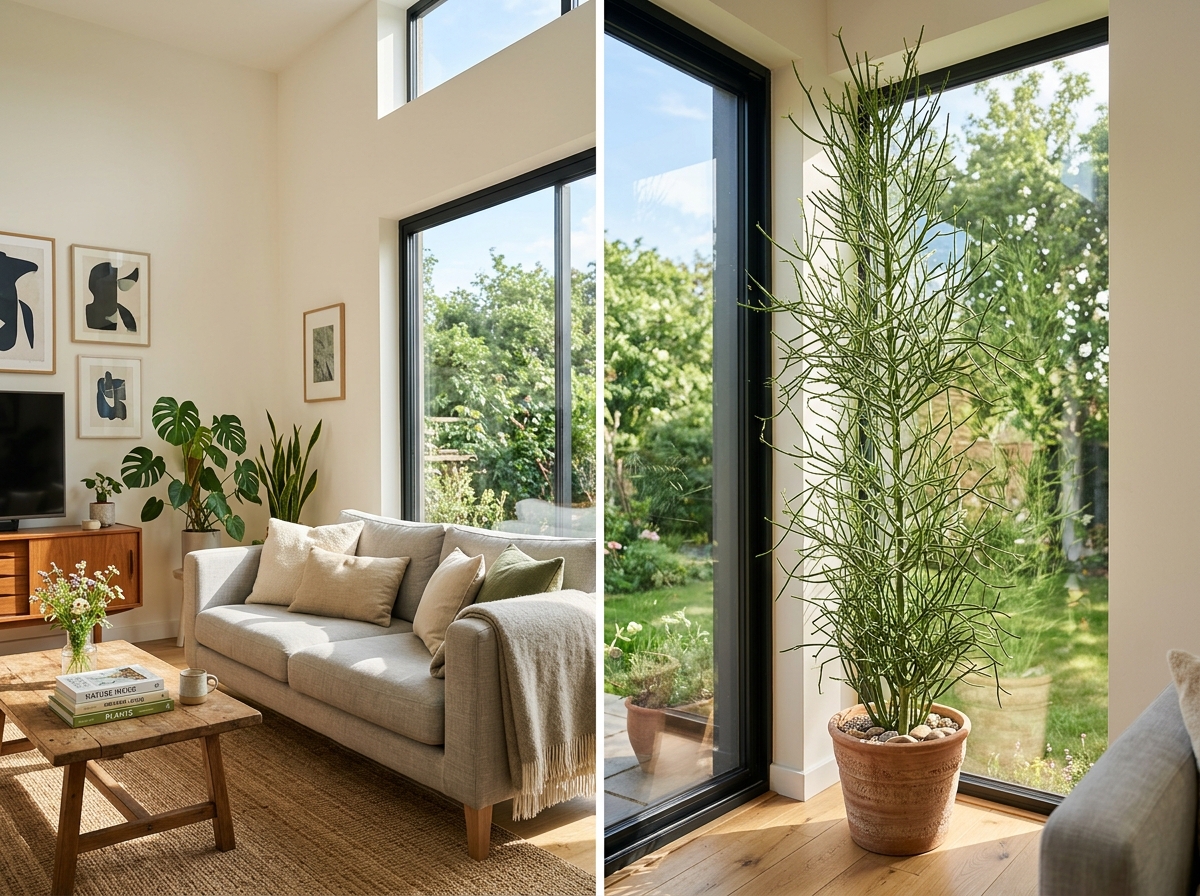
To truly master pencil cactus indoor care, you must respect its desert heritage. This plant is a sun-worshipper. In the wild, it bakes under the African sun all day, so placing it in a dark corner of your living room is a recipe for a sad, drooping plant.
Optimizing Light for Pencil Cactus Indoor Care
Ideally, your pencil cactus should receive 6 to 8 hours of direct sunlight every single day. The best spot in most homes is right up against a south-facing window. A west-facing window is a solid second choice, as it provides intense afternoon sun.
If your home lacks natural light, don’t worry—you can still enjoy this plant by using artificial grow lights. To mimic the intensity of the sun, aim for 14 to 16 hours of supplemental light daily. Without enough light, the plant will become “leggy,” meaning the stems grow thin and weak as they stretch toward the nearest light source. To keep the growth symmetrical, we recommend rotating the pot a quarter turn every week. For more details on lighting, check out our guide on sunlight-requirements-for-indoor-succulents.
Temperature and Humidity Preferences
Pencil cacti thrive in the same temperatures we do. A range of 65-75°F during the day is perfect. At night, they appreciate a slight drop in temperature, ideally staying between 60-65°F.
Crucially, these plants are not frost-tolerant. Never let the temperature in the room drop below 50°F, and keep them away from drafty windows or air conditioning vents during the winter months. Speaking of winter, providing a “winter rest period” with slightly cooler temperatures (around 55°F) and reduced water can actually encourage the plant to stay healthy and vigorous for the following spring. You can learn more about this in our article on indoor-succulent-care-during-winter.
When it comes to humidity, the pencil cactus is incredibly easygoing. It prefers low humidity (around 35%), which is typical for most climate-controlled homes. Unlike tropical ferns, you should never mist a pencil cactus; excess moisture on the stems can lead to rot.
Mastering the Watering Schedule and Soil Requirements
If there is one way to accidentally kill a pencil cactus, it’s through kindness—specifically, overwatering. These plants are built for drought. They store water in their fleshy stems, allowing them to survive for long periods without a drop.
The “Soak and Dry” Method
We recommend the “soak and dry” method. This means you water the plant thoroughly until water runs out of the drainage holes, and then you wait until the soil is 100% dry before watering again. In a bright, warm home, this usually happens about once every 10 to 14 days. In the winter, you might only need to water once a month.
To avoid indoor-succulent-watering-mistakes-to-avoid, always use your finger or a moisture meter to check the soil deep down in the pot. If you feel any moisture at all, wait a few more days. Remember: when in doubt, let it drought!
| Sign | Overwatering | Underwatering |
|---|---|---|
| Stem Appearance | Yellow, mushy, or greyish-brown | Shriveled, wrinkled, or leathery |
| Stability | Droopy, unstable, or falling over | Stiff but thin stems |
| Branching | Branches dropping off easily | Brown, crispy tips |
| Soil | Consistently damp or smells musty | Pulling away from the edges of the pot |
Soil Mix and Potting for Pencil Cactus Indoor Care
Proper drainage is the backbone of pencil cactus indoor care. You cannot use standard potting soil; it holds onto too much moisture and will suffocate the roots. Instead, use a high-quality best-soil-for-indoor-succulents mix.
A great DIY recipe is:
- 2 parts cactus/succulent potting mix
- 1 part coarse sand or poultry grit
- 1 part perlite or pumice
This ensures the water moves through the pot quickly. Regarding the container, we always suggest unglazed terracotta or clay pots. These materials are porous, allowing the soil to “breathe” and moisture to evaporate through the sides of the pot. Ensure the pot has at least one large drainage hole. For more help choosing a home for your plant, see best-pot-for-indoor-succulents.
Safety First: Pruning and Handling Toxic Sap
We cannot emphasize this enough: the pencil cactus is beautiful but dangerous. All parts of the Euphorbia tirucalli contain a milky, white latex sap. This sap is a natural defense mechanism, and it is highly irritating.
If the sap touches your skin, it can cause redness, itching, and even painful blisters. If it gets in your eyes, it can cause severe inflammation and temporary blindness. If ingested by pets or children, it causes nausea, vomiting, and mouth irritation. This is why the ASPCA Toxicity Warning is so important to heed.
Safe Handling Protocol:
- Wear Protection: Always wear thick gloves, long sleeves, and eye protection when pruning or repotting.
- Sterilize Tools: Use sharp, sterile shears to make clean cuts.
- Stop the Bleeding: When you cut a branch, the sap will “bleed” out. You can stop the flow by spraying the cut with cool water or dabbing it with a damp paper towel.
- Clean Up: Wash your tools with rubbing alcohol immediately after use, and wash your hands thoroughly even if you wore gloves.
For more safety tips, visit indoor-cactus-and-succulent-care-tips.
Propagation and Long-Term Maintenance
One of the joys of pencil cactus indoor care is how easy it is to create new plants. If your cactus is getting too tall or you want to share the love with a friend, propagation is the way to go.
How to Propagate
- Take a Cutting: Cut a healthy green stem about 6 inches long (wearing your safety gear!).
- Stop the Sap: Dip the cut end in water to stop the latex flow.
- The Callusing Phase: This is the most important step. Place the cutting in a dry, shaded spot for about a week. The cut end needs to dry out and form a hard “callus.” If you plant it while it’s still “wet,” it will rot.
- Planting: Once callused, tuck the cutting into a pot of moist succulent mix.
- Wait for Roots: Do not water for the first week. After that, water sparingly. Roots should form in about 4 weeks. You can find more details in our guide on how-to-propagate-succulents-indoors.
Fertilizing and Repotting
Pencil cacti are relatively slow growers but can put on up to 20 inches of growth in a single season if they are very happy. We recommend feeding them once a month from March through September with a balanced liquid fertilizer diluted to half-strength. Do not fertilize in the winter. For a deeper look at nutrition, see how-to-fertilize-succulents-indoors.
These plants actually enjoy being slightly root-bound, so you only need to repot every 2 to 3 years. When you do, choose a pot that is only 2 inches wider than the current one. Follow our repotting-indoor-succulents-step-by-step guide for a smooth transition.
Troubleshooting Common Pencil Cactus Indoor Care Issues
Even the hardiest plants run into trouble sometimes. Here is how to fix the most common pencil cactus problems:
- Mushy, Yellow Stems: This is a classic sign of root-rot-in-succulents-identifying-causes-and-solutions. It means the plant is sitting in water. Stop watering immediately, check the roots for rot (trimming away any black or mushy parts), and repot in fresh, dry soil.
- Wrinkled or Shriveled Stems: This is usually dehydration. If the soil is bone-dry and the stems look leathery, give the plant a good soak.
- Leggy, Pale Growth: Your plant is starving for light. Move it closer to a window or add a grow light.
- Pests: While rare, you might encounter mealybugs (they look like tiny bits of white cotton) or spider mites. Treat these by dabbing them with a cotton swab dipped in rubbing alcohol or using neem oil. Learn more about indoor-succulent-pests-and-treatments-keep-your-green-friends-healthy.
Frequently Asked Questions about Pencil Cacti
How fast does a pencil cactus grow indoors?
Indoors, a pencil cactus can grow between 2 and 20 inches in a single season, depending on the amount of light it receives. With 6-8 hours of direct sun, it can reach its maximum indoor height of 6 feet relatively quickly. If you prefer a smaller plant, you can easily maintain its size through pruning. It is widely considered one of the best low-maintenance-indoor-succulents for people who want a large plant without the constant upkeep of a Fiddle Leaf Fig.
Is it safe to touch a pencil cactus?
It is best to avoid touching the plant with bare skin. While the exterior of the stems is generally safe if the plant is undamaged, any small break or nick can release the toxic latex sap. If you have a latex allergy, you should be especially cautious. Always use gloves and keep the plant out of reach of curious pets and toddlers. For a full breakdown of the risks, consult the Euphorbia tirucalli safety data.
Why is my pencil cactus turning yellow or dropping branches?
Yellowing and branch drop are almost always related to water stress. Most often, it is a sign of root-rot-in-succulents-causes-and-solutions caused by overwatering. However, if the plant is extremely dry, it may drop branches as a survival tactic to conserve moisture. Check the soil moisture to determine which end of the spectrum you are on. In rare cases, a sudden drop in temperature or a cold draft can also cause branch drop.
Conclusion
At Finance Foxx, we believe that bringing nature indoors shouldn’t be a source of stress. The pencil cactus is the ultimate “set it and forget it” plant for the modern home. Its sculptural beauty adds immediate sophistication to any room, and its hardy nature makes it a perfect companion for busy professionals or frequent travelers.
By following this guide to pencil cactus indoor care, you can enjoy a massive, thriving succulent that lasts for decades. Just remember: give it plenty of sun, keep the watering can at bay, and always wear your gloves! If you need more help keeping your indoor jungle in peak condition, check out our maintenance services for expert tips and tricks. Happy planting!
