
The Truth About Growing Sempervivum Indoors Successfully
Essential Light and Temperature for Sempervivum Care Indoor
#
Sempervivum care indoor is simpler than most people think — and yes, these tough little rosettes can thrive inside your home with the right setup.
Here is a quick answer for getting started:
- Light: Place in a south-facing window with at least 6 hours of direct sun daily
- Water: Use the “drench and drought” method — water thoroughly, then wait until the soil is completely dry
- Soil: Use a well-draining cactus or succulent mix
- Temperature: Keep between 65°F and 80°F (18°C to 27°C)
- Fertilizer: Feed every 2-3 months during the growing season only
- Propagation: Separate offset “chicks” once they mature (after about 2-3 months)
Sempervivum — Latin for “forever living” — earns its name. These compact succulents belong to the Crassulaceae family and originate from the mountainous regions of Europe and Asia. They are built to survive harsh conditions: thin soil, scorching sun, and long dry spells.
That extreme toughness is exactly why they make such great indoor plants for busy people.
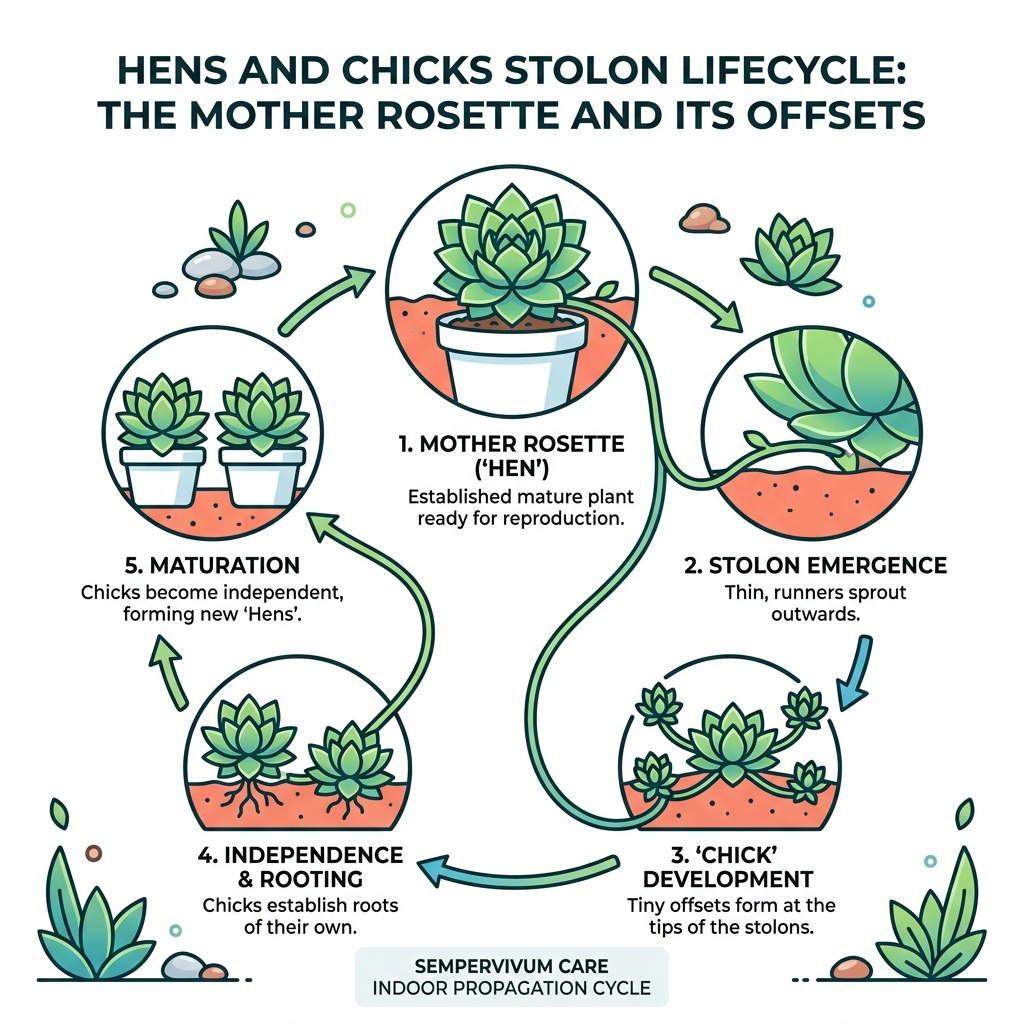
They grow low (just 2-6 inches tall), spread slowly, and ask for very little. The “hens and chicks” nickname comes from how the mother rosette (the hen) produces small offsets (the chicks) on thin stolons around its base. Over time, one plant quietly becomes a whole cluster.
The one real challenge indoors is light. Most homes simply don’t offer enough of it. But once you solve that, the rest of Sempervivum care practically takes care of itself.
When we bring an alpine plant like the Sempervivum into our living rooms, we have to remember where it came from. In the wild, these plants sit on exposed mountain ledges, soaking up intense, unfiltered UV rays. To replicate this, sempervivum care indoor requires a “more is more” approach to lighting.
The Power of the South-Facing Window
For the best results, your Sempervivum should live in a south-facing window. This is usually the brightest spot in any home, providing the minimum 6 hours of direct sunlight these plants crave. If you only have east or west-facing windows, your plant might survive, but it will likely lose its vibrant reds and purples, fading to a dull green.
Without enough light, you’ll notice a phenomenon called etiolation. This is when the plant “stretches” toward the light, becoming tall, leggy, and weak. To keep that tight, beautiful rosette shape, you must prioritize Sunlight Requirements for Indoor Succulents.

Supplementing with Technology
If your apartment is a bit of a “dark cave,” don’t worry—you can still grow Hens and Chicks! Many successful indoor gardeners use full spectrum grow lights to bridge the gap. These lights mimic the sun’s rays and can be programmed on a timer to ensure your plant gets 12–14 hours of “artificial day” to stay compact and colorful.
Managing the Indoor Climate
While Sempervivums are famous for surviving freezing temperatures outdoors (some down to -20°F!), they prefer a steady indoor range of 65°F to 80°F (18°C to 27°C) during the day.
One expert tip for sempervivum care indoor is to respect the seasons. In the winter, these plants naturally want to enter a dormancy phase. If you can move them to a slightly cooler room (around 50°F to 60°F) and reduce watering, they will reward you with much more vigorous growth when spring arrives. For more on managing these transitions, check out our Indoor Succulent Care Tips for Beginners.
Mastering the Watering and Soil Protocol
If there is one way to accidentally kill a Sempervivum, it’s by being “too nice” with the watering can. These plants are built for drought, not deluges. In fact, most indoor Sempervivum deaths are caused by root rot, which is why understanding the “drench and drought” method is vital.
The “Drench and Drought” Method
Forget a calendar schedule. Instead, use your finger to feel the soil. If the top two inches are bone dry, it’s time to water. When you do water, do it thoroughly until water runs out of the drainage holes at the bottom of the pot. Then—and this is the hard part—leave it alone until the soil is completely dry again.
This mimics the natural mountain rainstorms followed by long periods of sun. To avoid common pitfalls, read up on Indoor Succulent Watering Mistakes to Avoid.
Bottom Watering and Crown Rot
Because Hens and Chicks grow in tight rosettes that often cover the entire surface of the pot, it can be hard to get water into the soil without getting the leaves wet. Water trapped in the center of the rosette (the “crown”) can cause the plant to rot from the inside out.
To prevent this, we recommend “bottom watering.” Simply place your pot in a tray filled with an inch of water and let it sit for 10–15 minutes. The soil will wick up exactly what it needs through the drainage holes without ever getting the leaves wet.
Choosing the Right Foundation
The soil is the most important piece of the puzzle. You need a mix that allows water to pass through almost instantly. A standard Cactus and succulents mix is a great starting point, but we often like to “beef it up” with extra grit.
| Feature | Commercial Succulent Mix | DIY Grit-Heavy Mix |
|---|---|---|
| Drainage Speed | Moderate | High (Ideal) |
| Composition | Peat-based with some perlite | 1 part soil, 1 part coarse sand, 1 part pumice |
| Risk of Rot | Low | Very Low |
| Best For | Beginners | Enthusiasts / Humid homes |
Always ensure you are using the Best Pot for Indoor Succulents—one with large drainage holes. Terracotta is often the best choice for indoor use because the porous clay helps moisture evaporate from the sides of the pot, protecting the roots from staying too damp.
Propagation and Long-Term Maintenance
One of the most rewarding parts of sempervivum care indoor is watching your “hen” produce her “chicks.” It’s like a slow-motion firework display of new life.
Propagating Offsets in Sempervivum Care Indoor
The “chicks” are offsets that grow out from the mother plant on little stems called stolons. You’ll know they are ready to move out on their own when they are about 1/4 the size of the mother or have started developing their own tiny roots.
- Snip: Use a clean pair of scissors to cut the stolon connecting the chick to the hen.
- Callus: This is the most important step! Let the chick sit on a dry paper towel for 1–3 days. This allows the “wound” to dry and form a callus, which prevents bacteria from entering the plant.
- Plant: Place the chick on top of moist, well-draining soil. Don’t bury it deep; just press it gently into the surface.
- Wait: In 2–3 weeks, it will have established roots and begin growing as its own “hen.”
For a deeper dive into the mechanics of moving plants, see our guide on Repotting Indoor Succulents Step by Step. Interestingly, Sempervivums actually enjoy being a bit “pot-bound.” Keeping them in a slightly smaller container can actually encourage them to produce more offsets and maintain better leaf color.
Feeding and Grooming for Sempervivum Care Indoor
Sempervivums are light feeders. In their native habitat, they grow in cracks in rocks with almost no organic matter. Indoors, you can give them a boost during the growing season (spring and summer) using a balanced, liquid fertilizer diluted to half-strength.
Avoid high-nitrogen fertilizers, as these can cause the plant to grow too quickly, resulting in weak, “floppy” leaves. We recommend feeding once a month or every two months at most. Learn more about the nuances of plant nutrition in our article on How to Fertilize Succulents Indoors.
Grooming is also essential for health. As the plant grows, the bottom-most leaves will naturally wither and turn brown. This is normal! However, you should gently pull these dead leaves away to improve air circulation and prevent pests from hiding in the debris. If you’re unsure how to tidy up your plant safely, check out How to Prune Indoor Succulents.
Troubleshooting Common Indoor Challenges
Even the “forever living” plant can run into trouble. Most issues in sempervivum care indoor are visible if you know what to look for.
Leggy Growth vs. Compact Growth
If your plant starts to look like a tiny pine tree rather than a flat rosette, it is “etiolated.” This is a desperate cry for more light.
- The Fix: Move it to a sunnier window or install a grow light immediately. Unfortunately, the stretched part won’t “shrink” back, but you can “behead” the top rosette, let it callus, and replant it to start fresh.
The Dreaded Root Rot
If the base of your plant turns black or feels mushy, you are likely dealing with root rot. This is almost always caused by overwatering or poor drainage.
- The Fix: Stop watering immediately. Remove the plant from its pot and trim away any black, slimy roots. Replant in fresh, dry soil and wait at least two weeks before watering again. For more solutions, see Root Rot in Succulents Causes and Solutions.
Pests: The Mealybug Menace
Mealybugs look like tiny bits of white cotton hidden between the leaves. They suck the sap out of the plant and can quickly weaken it.
- The Fix: Dip a cotton swab in rubbing alcohol and dab the bugs directly. For larger infestations, you can use neem oil according to the label instructions.
Leaf Wrinkling
If the lower leaves are starting to look like a California raisin, your plant is thirsty! This is the plant using its internal water reserves to survive.
- The Fix: Give it a thorough drench. It should plump back up within 24–48 hours. You can refine your timing by following an Indoor Succulent Watering Schedule.
Frequently Asked Questions about Hens and Chicks
Is Sempervivum toxic to cats or dogs?
Great news for pet parents! Sempervivum species, including the common Sempervivum tectorum, are widely considered non-toxic to humans, cats, and dogs. While we don’t recommend letting your cat use your succulent as a snack (it’s not great for the plant or the cat’s stomach), it won’t cause the dangerous reactions that other houseplants like Lilies or Sago Palms do.
Why is my indoor plant losing its color?
This is almost always due to light intensity. Sempervivums produce “anthocyanins”—the same pigments that make blueberries blue or autumn leaves red—as a form of “sunscreen.” When they are indoors behind window glass (which filters out certain UV rays), the plant doesn’t feel the need to produce these pigments and reverts to green. Using a high-quality grow light can help bring those “stress colors” back.
Do indoor Sempervivums die after blooming?
Yes, but don’t panic! Sempervivums are “monocarpic.” This means a single rosette will grow for several years (usually 3–5), produce a tall flower stalk, and then die once the seeds are spent. However, because the plant has spent its life producing “chicks,” the family lives on. The mother rosette passes away, but she leaves behind a dozen or more clones to take her place.
Conclusion
Bringing the rugged beauty of the mountains into your home is a rewarding journey. While sempervivum care indoor requires a bit of attention to lighting and a “hands-off” approach to watering, these plants are among the most resilient companions you can find. They teach us that even in limited spaces, life finds a way to cluster, grow, and thrive.
By mimicking their natural alpine splendor—bright light, gritty soil, and the occasional “drench”—you can enjoy these “forever living” rosettes for years to come. For more expert tips on keeping your indoor garden in peak condition, explore More info about succulent maintenance here at Finance Foxx. Happy planting!
