
Best Grow Lights for Succulents Review
The Best Grow Lights for Succulents at a Glance
Grow lights for succulents are the simplest fix for keeping your indoor plants compact, colorful, and healthy — especially if your home doesn’t get much direct sun.
Quick picks by setup size:
| Setup | Best Light Type | Key Specs |
|---|---|---|
| Small (1-3 plants) | Clip-on or desktop LED | 5W-15W, 4000K-6500K |
| Medium (shelf display) | T5 fluorescent or LED bar | 24W+, 5000K-6500K |
| Large collection | LED panel or shop light | 54W+, full spectrum |
Key settings for healthy succulents:
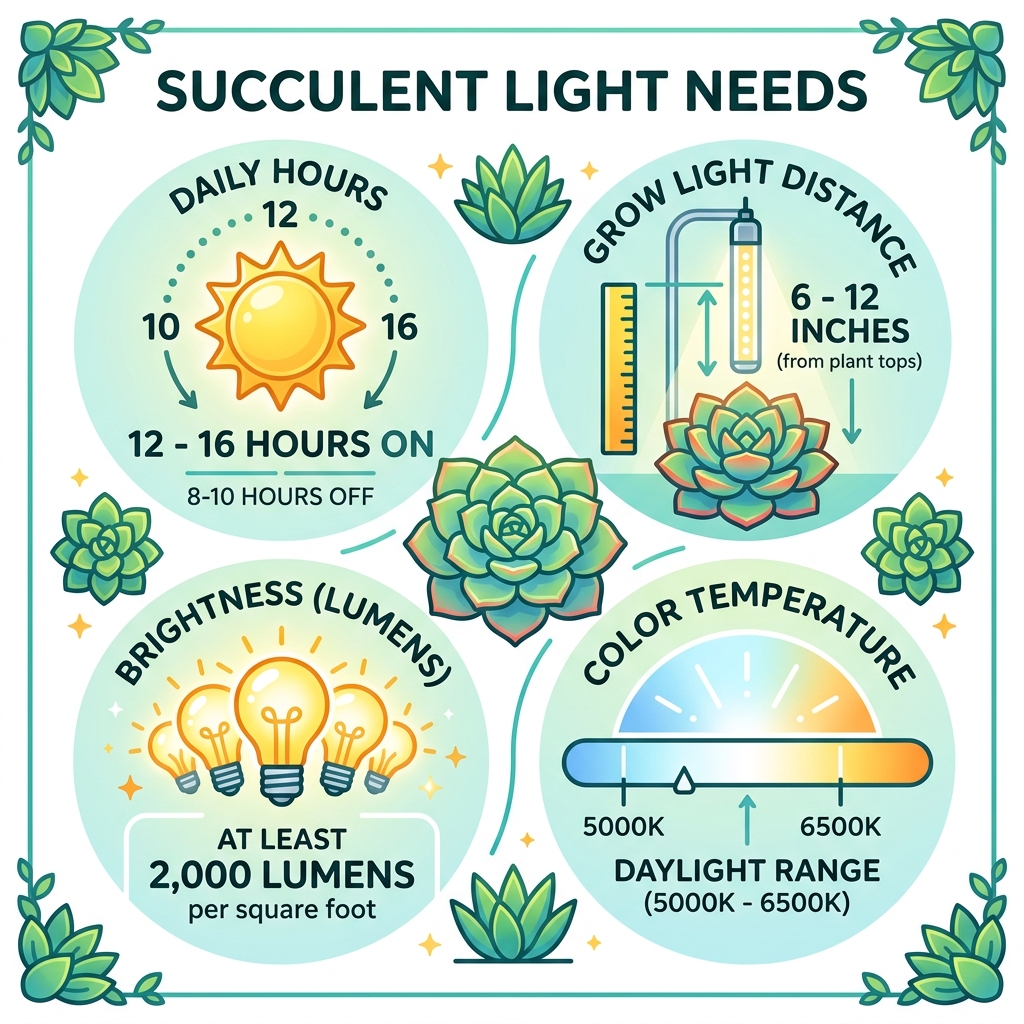
- Distance: 6-12 inches from plant tops
- Daily light: 12-16 hours on, 8-10 hours off
- Color temperature: 5000K-6500K (daylight range)
- Brightness: At least 2,000 lumens per square foot
Here’s the problem most succulent owners run into: you bring home a beautiful, tight little rosette — and a few weeks later it’s a pale, leggy mess reaching desperately toward the nearest window.
That’s etiolation — what happens when succulents don’t get enough light. And it’s incredibly common indoors.
Succulents evolved in bright desert environments, soaking up 6-12 hours of direct sun daily. A typical window, even a south-facing one, delivers only a fraction of that — and in winter, it’s even worse. A good grow light solves this without any complicated plant care routine.
The good news? You don’t need expensive equipment. The right grow light setup can be affordable, low-maintenance, and — importantly for a busy home — actually look good on a shelf or desk.
Why Your Indoor Succulents Need Grow Lights
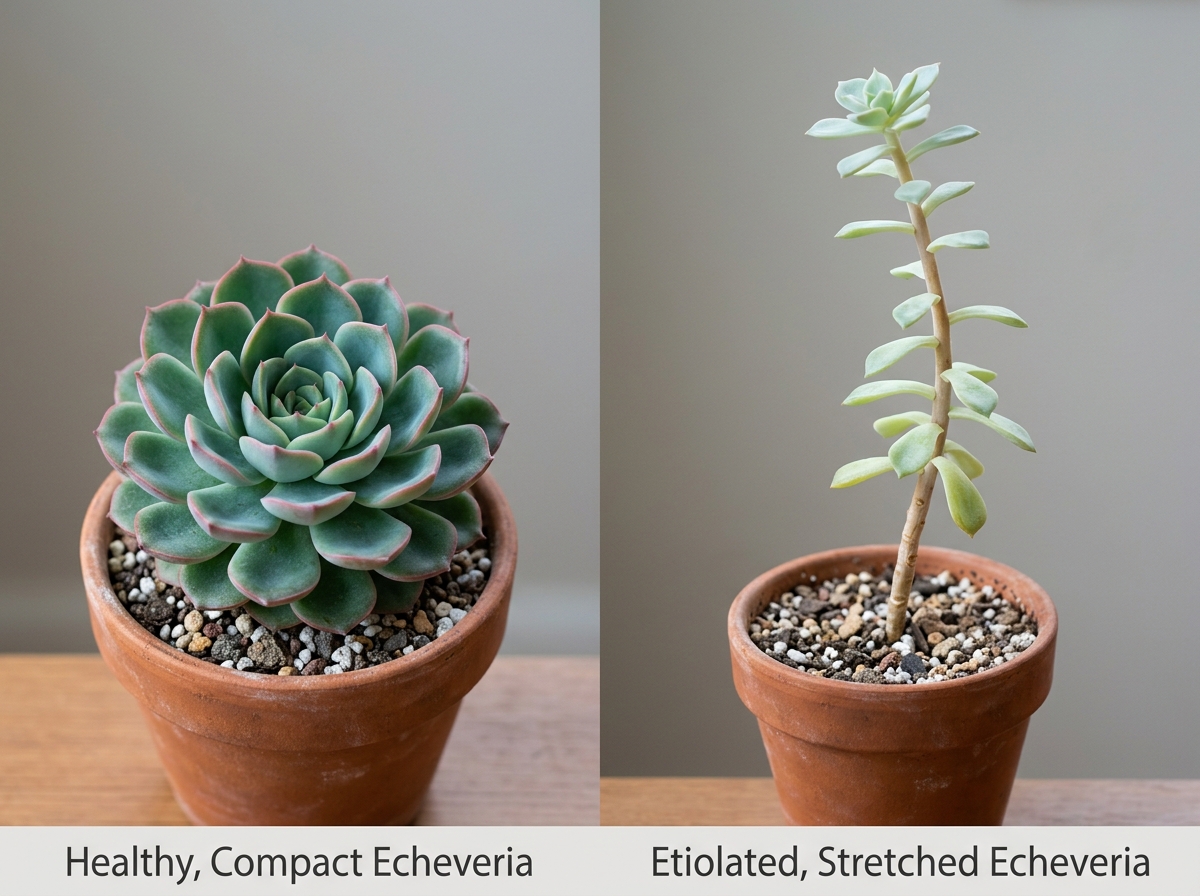
If you have ever noticed your once-perfect Echeveria starting to look more like a beanstalk, you have witnessed etiolation. Indoors, even the brightest windows often fail to provide the intensity succulents crave. While we might think a room feels “bright,” our eyes are excellent at adjusting to low light; plants, however, are not so easily fooled.
Photosynthesis and Energy
Succulents are sun-loving powerhouses. They rely on high-intensity light to fuel photosynthesis, the process of turning light into energy. Without enough “food” from the sun, the plant enters a survival mode. It stops producing vibrant pigments and begins to stretch its stem rapidly to “find” a light source. This is why how to prevent succulent stretching indoors is one of the most searched topics for indoor gardeners.
Signs Your Plant is Reaching
How do you know if your collection is struggling? Look for these red flags:
- Etiolation: The stem becomes thin, weak, and elongated with wide gaps between leaves.
- Color Fading: Vibrant reds, purples, and pinks turn into a dull, pale green.
- Leaf Movement: Leaves that usually point upward or form a tight cup begin to flatten out or point downward to increase their surface area for light absorption.
The Magic of Stress Coloring
One of the coolest things about succulents is “stress coloring.” When exposed to high-intensity light (and cool temperatures), many varieties produce anthocyanins—pigments that protect the plant from UV damage. This results in those stunning fiery oranges and deep purples we love. Indoors, sunlight requirements for indoor succulents are rarely met naturally, meaning grow lights for succulents are essential if you want to keep those “stressed” (but healthy!) colors year-round.
Choosing the Best Grow Lights for Succulents
Navigating watts, lumens, and spectrums can feel like a high school physics pop quiz. Let’s break it down into plain English so you can pick the right gear for your green friends.
LED vs. Fluorescent vs. HID
For the modern home grower, the choice usually comes down to LED or Fluorescent.
| Feature | LED Grow Lights | T5 Fluorescent | HID/Metal Halide |
|---|---|---|---|
| Efficiency | Very High (Low heat/cost) | Moderate | Low (Runs hot) |
| Lifespan | 50,000+ hours | 10,000 – 20,000 hours | 5,000 – 10,000 hours |
| Spectrum | Customizable/Full | Full Spectrum | Heavy Blue/Red |
| Best For | All setups/Energy saving | Shelf displays/Budget | Commercial/Large |
LEDs are our top recommendation. They are incredibly energy-efficient, producing almost no heat, which means you can place them closer to your plants without frying them. Fluorescent T5 bulbs are a classic choice for shelving; they provide a wide, even spread of light but do need to be replaced more often as their intensity fades over time.
The Technical “Sweet Spots”
When shopping, look for these specific numbers:
- Color Temperature: Aim for 5000K to 6500K. This mimics natural daylight. 6500K is often called “cool daylight” and is perfect for keeping plants compact.
- Lumens vs. PPFD: Lumens measure brightness to the human eye, while PPFD (Photosynthetic Photon Flux Density) measures light that plants actually use. For succulents, you want at least 2,000 lumens per square foot or a PPFD of 200-400 μmol/s/m² for general growth.
- Full Spectrum: Avoid the “blurple” (pink/purple) lights if you want your home to look normal. Modern “Full Spectrum White” LEDs provide all the blue and red wavelengths your plants need while looking like a clean, natural light to us.
Best grow lights for succulents for small collections
If you only have a few pots on a desk or nightstand, you don’t need a massive industrial fixture.
- Desktop Lamps: A simple desk lamp fitted with a high-output LED bulb (6500K) can work wonders.
- Clip-on LEDs: These often come with flexible “goosenecks,” allowing you to point light exactly where it’s needed. They are perfect for top succulent varieties for low light that just need a little extra “boost” to stay colorful.
- USB-Powered Lights: Great for small office setups, though ensure they have enough wattage (at least 5W-10W) to actually make a difference.
High-output grow lights for succulents for large displays
For the “addicted” collector with rows of plants, coverage is key.
- T5 HO (High Output) Bulbs: A 4-foot T5 HO bulb uses about 54 watts and pumps out 5,000 lumens. These are the gold standard for multi-tier shelving.
- LED Shop Lights: You can often find 4-foot LED shop lights at hardware stores. If they are rated at 5000K-6500K and provide high lumens, they are a fantastic, budget-friendly way to how to prevent succulent stretching indoors for dozens of plants at once.
- Panel Lights: These flat LED boards provide intense light over a square area (like a 2×2 foot space), making them ideal for deep shelves or grow tents.
Setting Up Your Lighting System for Success
Getting the light is only half the battle; how you use it determines whether your succulents thrive or just survive.
The 6-12 Inch Rule
Distance is everything. If the light is too far away, the intensity drops off significantly (thanks to the inverse square law of physics!).
- Fluorescent lights should be kept 6 to 12 inches from the top of the plants.
- LEDs can vary; high-wattage panels might need 12 to 18 inches, while smaller LED bars can sit as close as 6 inches.
If you see your plants starting to stretch, move the light closer. If you see bleached or brown spots, back it off.
Timing and the Photoperiod
Succulents are not like us; they don’t need a “lunch break,” but they do need to sleep. Most succulents use CAM photosynthesis, meaning they open their pores (stomata) at night to take in carbon dioxide. If you leave the lights on 24/7, you’ll actually stress the plant out.
- Ideal Schedule: 12 to 16 hours of light per day.
- Darkness: At least 8 hours of total darkness.
Using a smart timer or a simple mechanical outlet timer is the best way to ensure consistency. It’s much easier than remembering to flip a switch every morning and night!
Seasonal Adjustments
Just because they are indoors doesn’t mean they don’t feel the seasons. In the winter, you can mimic natural cycles by reducing the “on” time to 10-12 hours. This can help trigger dormancy or even blooming in certain species like Kalanchoe or Christmas Cacti. Always keep an eye on sunlight requirements for indoor succulents as the natural light from windows changes throughout the year.
Airflow and Rotation
Lights generate a small amount of heat, and stagnant air can lead to pests or rot. A small clip-on fan helps keep the air moving, mimicking a natural breeze. Also, remember to rotate your pots every week. Plants will naturally lean toward the strongest light source; rotating them ensures they grow straight and symmetrical.
Troubleshooting and Maintenance Tips
Even with the best grow lights for succulents, things can occasionally go sideways. Here is how to handle the most common hiccups.
Identifying Light Burn
Yes, you can have too much of a good thing. Light burn (or sunscald) happens when the light is too intense or too close.
- Symptoms: Look for white, silver, or tan “bleached” spots on the leaves that feel dry or crispy.
- The Fix: Move the light 2-3 inches further away or reduce the number of hours the light is on.
Managing Heat
While LEDs stay cool, large setups can still raise the temperature of a small room. Succulents love warmth, but if the soil dries out too fast, you might find yourself watering more than the usual “soak and dry” method dictates. Ensure your shelves aren’t trapping heat against the ceiling.
The Acclimation Process
If you just bought a plant from a dark grocery store, don’t put it 3 inches under a high-output LED immediately. It will fry!
- Start with the light further away (18-24 inches).
- Run the light for only 4-6 hours a day.
- Gradually increase the time and decrease the distance over 2 weeks.
Maintenance and Pests
Dusty bulbs emit less light. Every few months, turn off your lights and wipe the bulbs or LED diodes with a dry microfiber cloth. While you’re at it, check for pests like mealybugs. If you find any, a spray bottle of 70% isopropyl alcohol is your best friend. Spritz the bugs directly; the alcohol kills them on contact and evaporates quickly without harming the succulent’s waxy coating.
Frequently Asked Questions
Can I use regular LED bulbs for my succulents?
The short answer is: Yes, but with caveats. A standard “soft white” bulb used in a living room lamp usually doesn’t have the intensity or the right color spectrum. However, if you buy a “Daylight” LED bulb (rated 5000K-6500K) that puts out at least 1,500 to 2,000 lumens, it can work beautifully for a single plant. Just make sure the bulb is close—usually within 6-8 inches of the plant—since these bulbs aren’t designed to project light over long distances.
How many hours a day should I leave grow lights on?
Most enthusiasts find that 12 to 14 hours is the “sweet spot.” This provides enough energy to maintain those bright stress colors without overtaxing the plant. If you notice your plants are still stretching even with the light close, try bumping it up to 16 hours. Always ensure they get that crucial 8-hour “respiration period” in total darkness.
How far away should the light be from my plants?
For LED grow lights, start at 12 inches and monitor. If the plant stays compact, stay there. If it stretches, move to 6-8 inches. For Fluorescent T5s, they are less intense, so 6 inches is usually perfect. Always use your hand to feel the heat; if it feels uncomfortably warm to your skin after 30 seconds, it’s too close for the plant!
Conclusion
Bringing the sun indoors doesn’t have to be a daunting task. By choosing the right grow lights for succulents, setting them at the correct distance, and keeping them on a consistent timer, you can enjoy a vibrant, “un-stretched” garden even in the middle of a dark winter.
Whether you are starting small with a single clip-on LED or building a massive multi-tier plant palace, the key is observation. Your succulents will tell you exactly what they need—you just have to learn to read their leaves. For more tips on keeping your home and garden in top shape, be sure to explore our Maintenance Category.
Happy growing, and may your rosettes always stay tight and colorful!
