
Why Jade Plant Indoor Maintenance Is Easier Than You Think
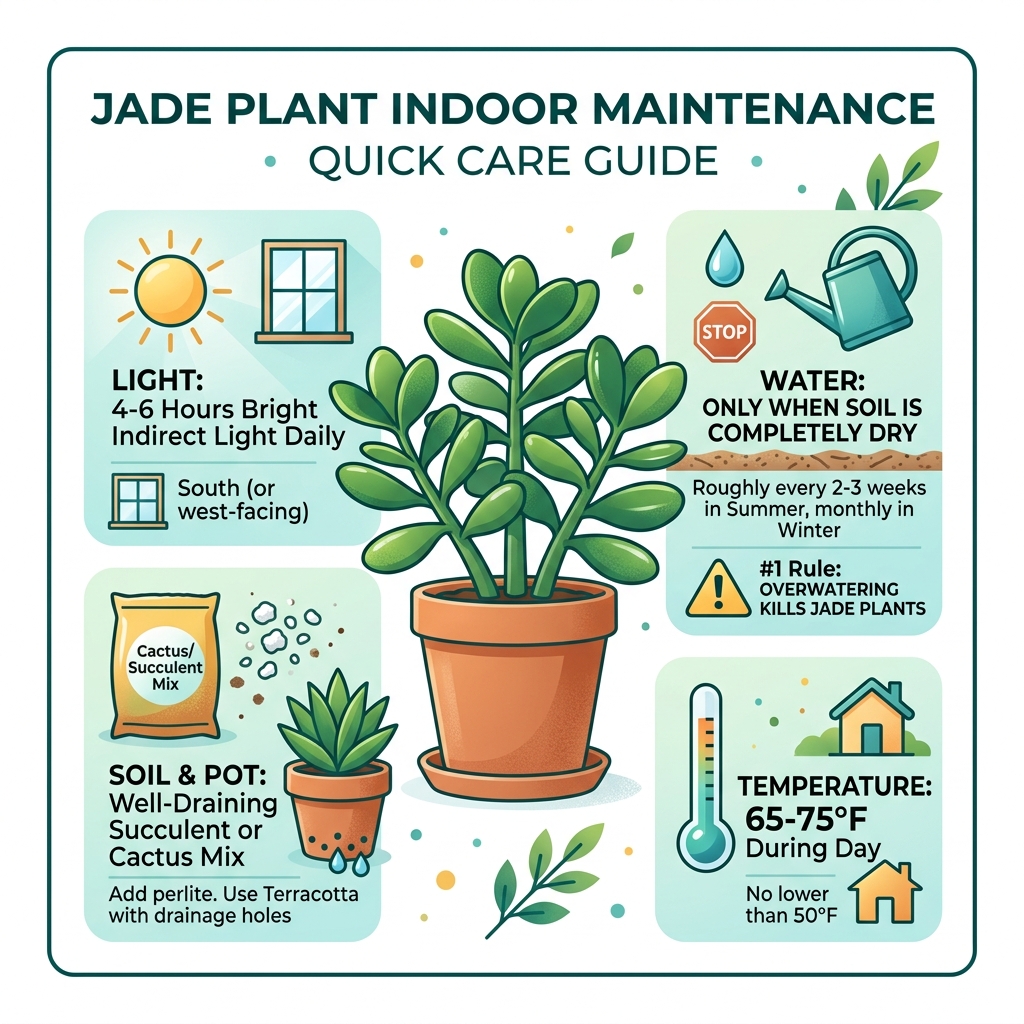
Jade plant indoor maintenance is straightforward when you follow a few key rules. Here’s a quick summary:
- Light: 4-6 hours of bright indirect light daily (south or west-facing window)
- Water: Only when soil is completely dry — roughly every 2-3 weeks in summer, monthly in winter
- Soil: Well-draining succulent or cactus mix, ideally with added perlite
- Pot: Terracotta with drainage holes to prevent root rot
- Temperature: 65-75°F during the day; no lower than 50°F
- Fertilizer: Diluted balanced fertilizer once or twice during spring and summer
- The #1 rule: Overwatering kills jade plants faster than anything else
The jade plant (Crassula ovata) — also called the Money Plant or Friendship Tree — is one of the most forgiving houseplants you can own. It thrives on a little neglect, stores water in its thick, glossy leaves, and can live 50 to 70 years or longer with basic care. Some families pass the same plant down through multiple generations.
That longevity is part of what makes jade so appealing for busy homeowners. You don’t need a green thumb. You just need to avoid a few common mistakes — most of which come down to watering too much or giving it too little light.
Whether you’ve just brought one home or you’re trying to revive a struggling plant, this guide covers everything you need to keep your jade healthy indoors.
Essential Basics of Jade Plant Indoor Maintenance
When we talk about jade plant indoor maintenance, we are looking at a plant that is essentially a living heirloom. Native to the rocky hillsides of South Africa and Mozambique, the Crassula ovata is a succulent perennial designed by nature to survive harsh, dry conditions. This genetic history is exactly why it’s so successful in our climate-controlled homes.
In its natural habitat, a jade plant can grow into a massive 10-foot shrub. Indoors, however, they are much more manageable, typically reaching between 3 to 6 feet tall over several decades. They are slow growers, often adding only about 2 inches of height per year. This slow pace is part of their charm; they develop thick, woody trunks that give them a miniature, tree-like appearance without the high-maintenance demands of a traditional bonsai.
One vital thing to keep in mind is safety. According to the ASPCA toxicity guidelines, jade plants are toxic to dogs and cats. If ingested, they can cause vomiting and lethargy. While they are beautiful and symbolize prosperity in Feng Shui, we always recommend placing them on high shelves or in rooms where curious pets can’t reach them. For those just starting their plant journey, checking out indoor-succulent-care-tips-for-beginners can help you set up a safe and healthy environment for all your green friends.
Optimal Lighting for Jade Plant Indoor Maintenance
Light is the fuel that keeps your jade plant’s leaves plump and its “trunk” sturdy. Ideally, your jade needs at least 6 hours of bright light every day. A south-facing window is usually the “gold star” location, as it provides the most consistent intensity.
If your jade doesn’t get enough light, it will start to tell you. You might notice “leggy” growth—where the stems become thin and stretched out as the plant desperately reaches for the nearest light source. To avoid this, you can read our guide on how to prevent succulent stretching indoors-a-detailed-guide.
On the flip side, mature jade plants can actually handle some direct sunlight, which often rewards you with beautiful red-tinged leaf edges. However, young plants should be kept in bright, indirect light to prevent their delicate leaves from scorching. If you aren’t sure if your spot is bright enough, our breakdown of sunlight-requirements-for-indoor-succulents offers more specific tips on measuring light in your home.
Temperature and Humidity Preferences
Jade plants are very much like us—they prefer standard room temperatures. They are happiest when the thermometer reads between 65-75°F during the day. At night, they can tolerate slightly cooler temperatures, even down to 50-55°F, which actually mimics the natural desert cooling they experience in the wild.
One of the biggest perks of jade plant indoor maintenance is that these plants hate humidity. While your tropical ferns might be begging for a mister, your jade wants dry air. High humidity can lead to fungal issues or powdery mildew.
- Avoid Drafts: Keep your jade away from air conditioning vents or drafty winter windows.
- Minimum Temp: Never let the temperature drop below 50°F, as frost or extreme cold will cause the water-filled leaves to freeze and turn to mush.
- Indoor Tips: For more environmental advice, see indoor-succulent-care-tips-for-beginners-2.
Potting, Soil, and Watering Requirements
The foundation of a healthy jade is what’s happening below the soil line. Because jade plants become top-heavy as they age, we always recommend using a heavy, sturdy pot like terracotta or ceramic. Terracotta is particularly excellent because it is porous, allowing moisture to wick away from the roots, which is the best defense against the dreaded root rot.
The soil you choose is equally important. Standard “all-purpose” potting soil holds onto way too much water for a succulent. You need a mix that breathes. We suggest a high-quality best-soil-for-indoor-succulents or a DIY mix of one part potting soil, one part coarse sand, and one part perlite or pumice. Ensuring you have the best-pot-for-indoor-succulents with a large drainage hole is non-negotiable.
| Feature | Standard Potting Soil | Succulent/Gritty Mix |
|---|---|---|
| Water Retention | High (Stays wet for days) | Low (Drains almost instantly) |
| Aeration | Low (Can become compacted) | High (Allows roots to breathe) |
| Root Rot Risk | High | Very Low |
| Best For | Ferns, Tropicals | Jades, Cacti, Succulents |
The “Bone Dry” Watering Method
If we could only give you one piece of advice for jade plant indoor maintenance, it would be this: when in doubt, don’t water. Jade plants store a massive amount of water in their leaves and stems. They would much rather be thirsty for a week than sit in damp soil for a day.
We use the “soak and dry” method. This means you water the plant thoroughly until water runs out of the drainage holes, then you wait until the soil is “bone dry” at least two inches down before watering again. You can use a moisture meter to be precise, or simply stick a wooden chopstick into the soil. If it comes out clean and dry, it’s time to drink.
Signs of trouble:
- Overwatering: Leaves turn yellow, feel mushy, or drop off while still looking plump. This can lead to root-rot-in-succulents-causes-and-solutions.
- Underwatering: Leaves look wrinkled, shriveled, or limp.
- Schedule: Generally, this means watering every 10-14 days in summer and potentially only once a month in winter. Check out our indoor-succulent-watering-schedule for more details and avoid these indoor-succulent-watering-mistakes-to-avoid.
Fertilizing for Long-Term Health
Jades aren’t heavy feeders, but a little “snack” during the growing season helps them maintain those glossy green leaves. From early spring through late summer, we recommend using a diluted balanced fertilizer. A standard 20-20-20 formula diluted to half-strength works well, or you can use a specific succulent fertilizer.
Apply the fertilizer about once every 2 to 3 months. Never fertilize in the winter when the plant is dormant, and always make sure the soil is slightly damp before adding liquid fertilizer to avoid burning the roots. For a deeper dive into feeding schedules, see how-to-fertilize-succulents-indoors.
Pruning, Repotting, and Propagation Techniques
One of the coolest things about jade plants is how much control you have over their shape. If your jade is getting a bit wild or “leggy,” pruning is your best friend.
Pruning encourages the plant to grow bushier rather than taller. Using precision pruning shears, you can snip off the top of a branch just above one of the “rings” (leaf nodes) on the stem. Two new branches will typically sprout from that point. This is how enthusiasts create that beautiful bonsai look. If you’re nervous about cutting your plant, follow our guide on how-to-prune-indoor-succulents.
Repotting is another vital part of long-term care, but don’t rush it! Jades actually enjoy being slightly root-bound. You should only need to repot young plants every 2-3 years and mature ones every 4-5 years. When you do, choose a pot only one size larger (1-2 inches wider). You can find a repotting-indoor-succulents-step-by-step guide here to make the transition stress-free.
Step-by-Step Propagation
Want more plants for free? Jade plants are incredibly easy to propagate. In the wild, a leaf that knocks off the plant and falls to the ground will often sprout roots all on its own. You can replicate this at home using stem or leaf cuttings.
- Take the Cutting: Snip a 3-4 inch stem or gently wiggle off a healthy leaf.
- The Callus Phase: This is the most important step! Lay the cutting on a dry paper towel for 3 to 7 days. The “wound” must dry out and form a callous (a scab) to prevent rot.
- Planting: Once calloused, stick the stem into a dry succulent mix. For leaves, simply lay them on top of the soil.
- Wait: Don’t water yet! Wait about two weeks until tiny roots begin to form. You can use a bit of rooting hormone to speed things up, but it’s rarely necessary for jades.
According to University of Wisconsin propagation research, jades root most successfully in the spring and summer. For more visual aids, check how-to-propagate-succulents-indoors.
Seasonal Adjustments for Jade Plant Indoor Maintenance
Your jade plant indoor maintenance routine should change with the seasons. Just like we pull out the sweaters in October, your jade enters a period of rest.
- Winter Care: During the winter months, growth slows down significantly. You should reduce watering to once every 4-6 weeks. The plant doesn’t need much “fuel” when it isn’t actively growing. See indoor-succulent-care-during-winter for a full winter survival guide.
- Outdoor Summer Vacations: Many people move their jades outside for the summer. This can lead to a growth spurt and thicker trunks! However, you must acclimate them gradually. Start with an hour of shade and slowly move them toward more sun over 10 days to prevent leaf burn.
- Frost Warning: Always bring them back inside before the first frost. As noted in the Jade Plant Care Guide, they are very sensitive to temperatures below 50°F.
Troubleshooting Pests and Common Growth Issues
Even the hardiest plants run into trouble sometimes. The most common pest you’ll face with a jade is the mealybug. These look like tiny bits of white, fuzzy cotton hiding in the “armpits” of the leaves.
To treat them, you don’t need harsh chemicals. Simply dip a cotton swab in rubbing alcohol and dab it directly onto the bugs. For larger infestations, a neem oil solution can be effective. Other pests like spider mites (look for tiny webs) or scale (small brown bumps) can be treated similarly. For a full list of “bad guys,” see our guide on indoor-succulent-pests-and-treatments-keep-your-green-friends-healthy.
Identifying Leaf Discoloration and Drop
Your jade’s leaves are like a health dashboard. Here is how to read the “warning lights”:
- Yellow and Mushy: This is almost always a sign of overwatering and potential root rot. Stop watering immediately and check the roots.
- Red Edges: This is usually “sun stress,” which is actually a good thing! It means your plant is getting plenty of light.
- White Spots: If you see tiny white or black dots that look like pores, don’t panic. These are often “hydathodes,” which the plant uses to “sweat” out excess minerals from tap water. It’s perfectly healthy.
- Sudden Leaf Drop: This can be caused by extreme temperature shifts, cold drafts, or severe underwatering.
Encouraging Indoor Blooms
Can a jade plant flower indoors? Yes, but it’s the “final boss” level of jade plant indoor maintenance. Most jades won’t flower until they are at least 10 years old.
To encourage those beautiful star-shaped white or pink flowers, you need to mimic the South African winter. This involves:
- Cool Nights: Keep the plant in a room that stays around 55°F in the autumn.
- Drought Stress: Stop watering almost entirely for several weeks in the fall.
- Short Days: Ensure the plant gets at least 12 hours of complete darkness every night for about six weeks.
Following these Clemson University flowering tips can result in a stunning winter display.
Popular Indoor Jade Varieties
While the “Classic Jade” is the most common, there are several fun varieties that offer different textures and colors for your indoor garden.
- ‘Gollum’ or ‘Hobbit’: Often called “ET’s Fingers,” these have tubular leaves that look genuinely alien. They are great for adding a sculptural element to your home.
- ‘Hummel’s Sunset’: This variety turns a stunning golden-yellow and bright red when exposed to enough sunlight.
- ‘Tricolor’: A beautiful variegated version with white, cream, and green stripes on the leaves.
- ‘Baby Jade’ (Portulacaria afra): While technically a different genus, it looks like a miniature jade and is one of the best low-maintenance-indoor-succulents for small spaces.
For those with less-than-ideal lighting, you might want to explore top-succulent-varieties-for-low-light, though most jades will still prefer a bright window.
Frequently Asked Questions about Jade Plants
Why is my jade plant dropping its leaves?
The most common reason is overwatering, which causes the roots to die. However, it can also happen due to a sudden change in temperature (like a cold draft) or a lack of light. If the leaves are dropping from the bottom of the stem and the plant looks healthy otherwise, it might just be natural aging as the stem turns woody.
How often should I repot my indoor jade plant?
Jades are slow growers and don’t mind a tight pot. Young plants can be repotted every 2-3 years, while mature, large jades only need it every 4-5 years. Always wait until the spring when the plant is starting its active growth phase.
Is the jade plant toxic to cats and dogs?
Yes, it is. According to the ASPCA, jade plants contain unknown toxins that can cause vomiting, a slow heart rate, and depression in pets. Keep your jade on a high shelf or in a room your pets cannot access.
Conclusion
At Finance Foxx, we believe that bringing nature into your home shouldn’t be a source of stress. The jade plant is the ultimate “slow living” companion—a plant that asks for very little but gives back decades of beauty and, if you believe the folklore, a little bit of prosperity and good luck.
By mastering the basics of jade plant indoor maintenance—plenty of light, very little water, and the right well-draining soil—you are setting up a green friend that could very well outlive your furniture. It’s a living heirloom that grows with you.
If you’re looking for more ways to keep your indoor jungle thriving without the headache, explore our More info about succulent maintenance services for expert tips and professional care guides. Happy planting!
