
Drought Tolerant Indoor Plants That Thrive on Neglect
The Best Drought-Tolerant Indoor Plants for Busy Homes
Drought tolerant indoor plants are the easiest way to add greenery to your home without the stress of constant watering. Here are the top options to consider:
- Snake Plant – survives weeks without water, tolerates low light
- ZZ Plant – thrives on neglect, handles a wide range of light conditions
- Pothos – fast-growing, forgiving, nearly impossible to kill
- Aloe Vera – stores water in thick leaves, needs watering every 2-3 weeks
- Ponytail Palm – stores water in its bulbous trunk, very low maintenance
- Zebra Haworthia – compact, pet-safe, perfect for windowsills
- Jade Plant – slow-growing, long-lived, minimal care needed
- Cast Iron Plant – tolerates low light, drought, and neglect equally well
- Sago Palm – ancient, tough, drinks very little water
- Rose of Jericho – can survive years without a single drop of water
Most of these plants need watering only every 1-3 weeks, and some can go even longer.
Life gets busy. Watering schedules get forgotten. And most common houseplants make you pay for it with yellowing leaves or worse.
That’s exactly why drought-tolerant plants are such a smart choice for urban homes. They evolved in dry, harsh environments — so skipping a watering (or three) is no big deal to them.
Some, like the Snake Plant, are so tough they’re commonly used in airports and shopping malls because they thrive even with minimal care and inconsistent light.
Whether you travel frequently, work long hours, or simply want beautiful greenery without the guilt, this list has you covered.
What Makes a Houseplant Drought-Tolerant?
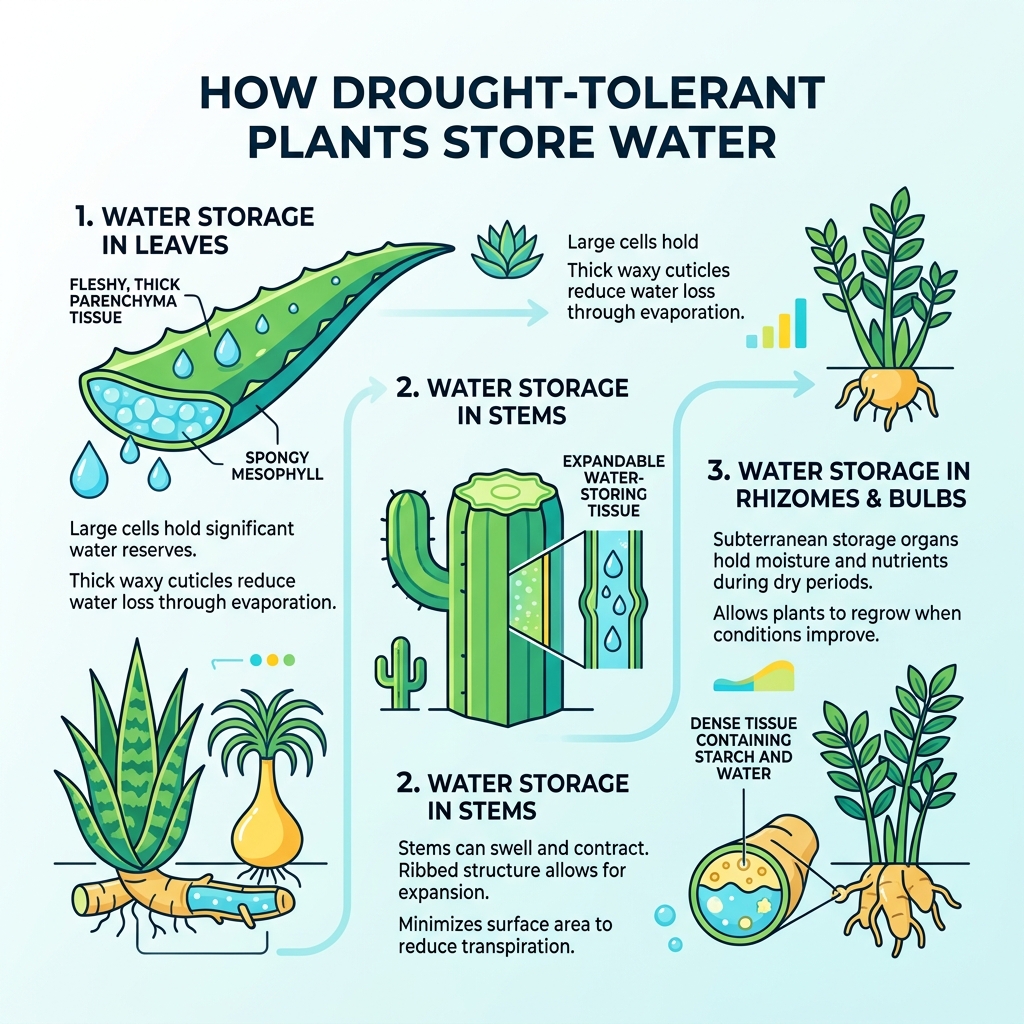
Have you ever wondered how a plant can sit on a shelf for a month without a drop of water and still look like it’s ready for a photo shoot? It’s not magic; it’s brilliant biological engineering. Drought tolerant indoor plants have developed specialized survival mechanisms to endure long periods of aridity in the wild.
One of the most fascinating adaptations is CAM photosynthesis (Crassulacean Acid Metabolism). Most plants open their stomata (tiny pores on their leaves) during the day to take in carbon dioxide, but this causes them to lose water through evaporation. Drought-tolerant superstars like the Snake Plant are much smarter. According to the Snake plant – Dracaena trifasciata | Kew, these plants keep their stomata closed during the heat of the day to prevent moisture loss and only open them at night to breathe.
Beyond their “night-breathing” habits, these plants use various physical storage units:
- Succulent Foliage: Plants like Aloe Vera and Jade store water in thick, fleshy leaves. These act as internal reservoirs that the plant sips from when the soil goes dry.
- Rhizomatous Roots: If you look at the Scientific profile for snake plant, you’ll see they grow from thick underground stems called rhizomes. These chunky roots store energy and water, allowing the plant to push out new growth even during a “drought” in your living room.
- Waxy Coatings: Many of these plants have a thick, waxy cuticle on their leaves. This serves as a waterproof barrier, sealing moisture inside the plant.
- Bulbous Trunks: The Ponytail Palm is a classic example of a “caudiciform” plant, meaning it has a swollen base or trunk specifically designed for water storage.
Top Drought-Tolerant Species for Your Home
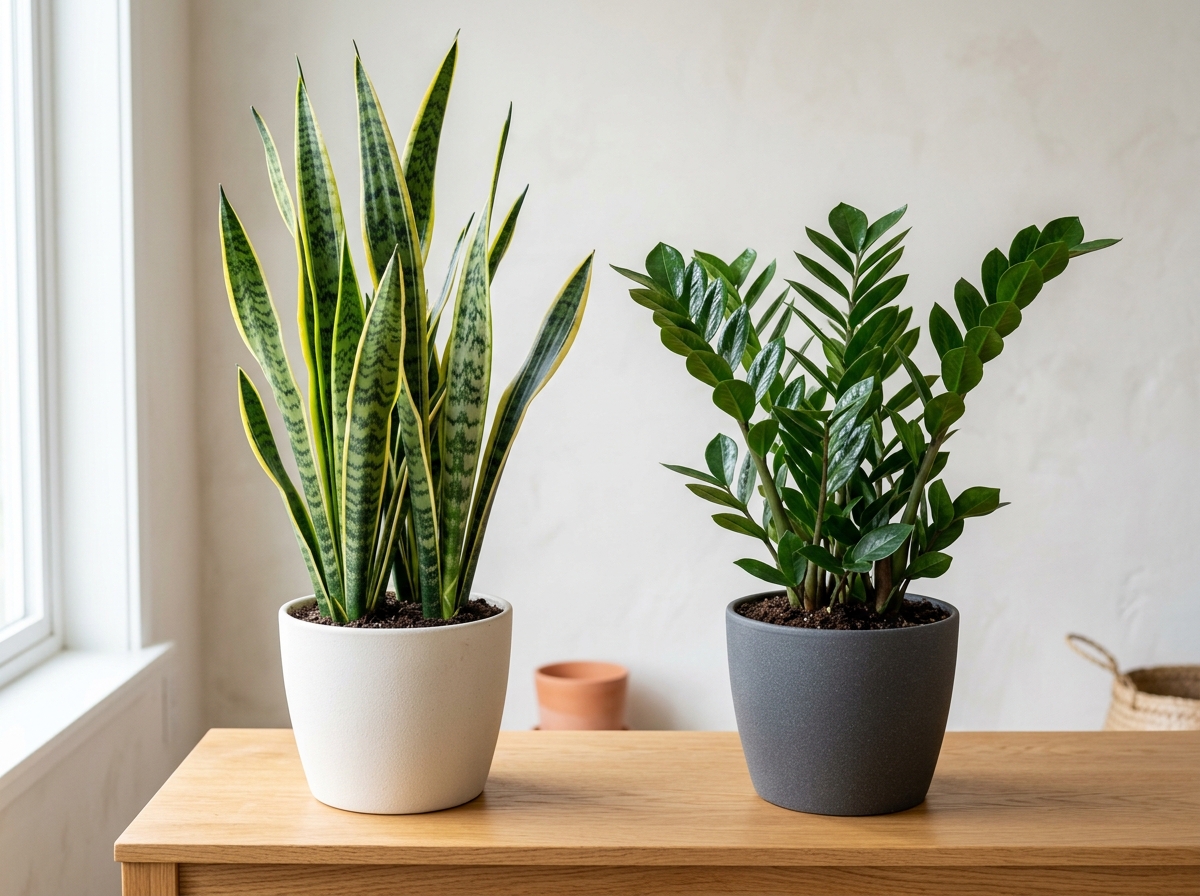
When we talk about the “hall of fame” for low-maintenance greenery, a few names consistently rise to the top. These plants aren’t just survivors; they are decorative powerhouses that fit into almost any interior design style.
1. Snake Plant (Dracaena trifasciata)
Formerly known as Sansevieria, recent DNA sequencing has officially moved this plant into the Dracaena genus. Whatever you call it, it is arguably the king of drought tolerant indoor plants. In the wild, they can reach up to 6 feet tall, though they usually stay between 2 and 3 feet indoors. They are perfect for frequent travelers because they can survive for several weeks without water. If you are looking for indoor succulent plants for low maintenance, this should be your first choice.
2. ZZ Plant (Zamioculcas zamiifolia)
The ZZ plant is famous for its waxy, deep green leaves that look almost artificial because they are so shiny. It stores water in large, potato-like rhizomes under the soil. We love this plant because it is incredibly versatile; it can handle the bright light of a sunroom or the dim corners of a windowless office.
3. Ponytail Palm (Beaucarnea recurvata)
Despite its name, it’s not actually a palm but a succulent. Its base looks like an elephant’s foot, which is where it stores its water supply. It’s a slow grower but can eventually reach 10 feet tall indoors. We recommend this for anyone who wants a “statement” plant that doesn’t require a statement-sized effort to keep alive.
4. Aloe Vera
Everyone knows Aloe for its medicinal properties, but it’s also a fantastic houseplant. It needs a sunny spot and a drink only every few weeks. If you’re curious about the specifics, check out our guide on how to grow aloe vera indoors.
5. Zebra Haworthia (Haworthiopsis attenuata)
This is a charming, compact succulent that features white “pearl” bumps on its leaves. Unlike its cousin H. fasciata, which is smooth on the inside of the leaf, the Zebra Haworthia (Haworthiopsis attenuata) has these tubercles on both sides. It’s a slow grower that can live up to 50 years!
6. Cast Iron Plant (Aspidistra elatior)
The name says it all. This plant is as tough as iron. It was a favorite in Victorian-era homes because it could survive the low light and poor air quality of coal-heated rooms. It doesn’t need much water and is virtually indestructible.
7. Pothos (Epipremnum aureum)
While not a succulent, Pothos is surprisingly drought-tolerant. Its trailing vines can grow over 8 feet long. It will “tell” you when it’s thirsty by wilting slightly, but it bounces back almost immediately after a drink. It’s one of the most unique succulents to grow at home if you consider its durability (though botanically it’s a tropical vine).
8. Rose of Jericho (Selaginella lepidophylla)
This is the ultimate “resurrection” plant. It can survive for years in a dormant, brown, ball-like state without a single drop of water. When you place it in a bowl of water, it unfurls and turns green within a few hours.
9. String of Dolphins
A whimsical succulent with leaves that look exactly like jumping dolphins. It’s a beautiful hanging plant that prefers to dry out completely between waterings.
Drought-Tolerant Plant Comparison Table
| Plant Name | Watering Frequency | Ideal Light | Pet Safe? |
|---|---|---|---|
| Snake Plant | Every 3-4 weeks | Low to Bright Indirect | No |
| ZZ Plant | Every 3-4 weeks | Low to Bright Indirect | No |
| Ponytail Palm | Every 2-3 weeks | Bright Indirect | Yes |
| Aloe Vera | Every 2-3 weeks | Bright Indirect/Direct | No |
| Zebra Haworthia | Every 3 weeks | Bright Indirect | Yes |
| Cast Iron Plant | Every 2-3 weeks | Low to Medium | Yes |
| Pothos | Every 1-2 weeks | Low to Bright Indirect | No |
| Sago Palm | Every 3-4 weeks | Bright Indirect | No (Highly Toxic) |
| Jade Plant | Every 2-3 weeks | Bright Indirect/Direct | No |
| Jade Plant | Every 2-3 weeks | Bright Indirect/Direct | No |
Essential Care for Drought Tolerant Indoor Plants
Even though these plants are the “survivalists” of the indoor world, they still have a few non-negotiable needs. The biggest mistake people make with drought tolerant indoor plants is actually giving them too much love (in the form of water).
The Golden Rule: Drainage is Everything
Because these plants are designed to store water, they absolutely hate sitting in soggy soil. Standing water leads to root rot, which is the fastest way to kill a drought-tolerant plant.
- Pots: Always choose pots with drainage holes. Terracotta is an excellent choice because the porous clay helps wick excess moisture away from the roots.
- Soil: Never use standard potting soil. Instead, look for the best soil for indoor succulents, which usually contains sand, perlite, or pumice to ensure fast drainage.
Master the Watering Schedule
Forget a calendar; use your fingers! Before watering, stick your finger two inches into the soil. If it feels even slightly damp, walk away. Most of these plants thrive when you follow a strict indoor succulent watering schedule that allows the soil to dry out 100% between drinks.
Recognizing “The Grumpies” (Signs of Trouble)
Your plants will talk to you if you know what to look for.
- Overwatering: Leaves become yellow, translucent, or mushy. If the base of the plant feels soft, you might have root rot. Learning how to prevent succulent leaves from falling often starts with putting the watering can down.
- Underwatering: Leaves may wrinkle, pucker, or feel “thin.” While these plants handle drought well, they shouldn’t be bone-dry for months on end (except for the Rose of Jericho!).
Light and Temperature
While many of these plants are sold as “low light,” most prefer bright, indirect sunlight to look their best. Check out the sunlight requirements for indoor succulents to ensure your Zebra Haworthia or Aloe isn’t stretching toward the window (a process called etiolation). As for temperature, most prefer the same range we do: 60-80°F (15-26°C).
Advanced Tips: Propagation and Revival
Once you’ve mastered keeping your plants alive, you might want to start making “babies” to give to friends or to fill up more corners of your home.
Propagation 101
Propagating drought tolerant indoor plants is surprisingly easy.
- Leaf Cuttings: For plants like Jade or Echeveria, you can simply wiggle a leaf off and lay it on top of dry soil. In a few weeks, a tiny new plant will sprout from the base.
- Division: Plants like the Snake Plant and ZZ Plant grow in clumps. When the pot gets too crowded, you can take the plant out and gently pull the rhizomes apart to create two or three separate plants.
- Water Rooting: Pothos cuttings root incredibly fast in a simple jar of water. Just make sure the “node” (the little bump where the leaf meets the stem) is submerged.
For a deeper dive, read our guide on how to propagate succulents indoors.
The Art of the Prune
If your Pothos is getting too leggy or your succulent is growing a bit wild, don’t be afraid to trim. Knowing how to prune indoor succulents helps encourage bushier growth and keeps the plant looking tidy.
Reviving a Neglected Plant
If you’ve truly ignored a plant for months and it looks like a goner, don’t toss it yet! Many drought-tolerant plants are remarkably resilient. Saving a dying succulent often involves a “bottom-watering” technique where you let the pot sit in a tray of water for an hour to fully rehydrate the soil, followed by a long period of drying out.
Dealing with Unwanted Guests
Even tough plants get pests. Keep an eye out for:
- Mealybugs: Small, white, cottony spots in the nooks of leaves.
- Spider Mites: Tiny webs on the undersides of leaves. Wiping the leaves with a damp cloth or using neem oil is usually enough to keep these at bay.
Frequently Asked Questions about Drought Tolerant Indoor Plants
Which drought tolerant indoor plants are safe for pets?
This is a huge concern for cat and dog owners. While many popular plants like the Snake Plant and ZZ Plant are mildly toxic if ingested, there are several wonderful non-toxic options. The Ponytail Palm, Zebra Haworthia, and Burro’s Tail are all pet-safe. If you’re looking for a gift for a pet owner, these are the best succulent gifts for plant lovers that won’t result in a trip to the vet.
Can drought tolerant indoor plants grow in low light?
Yes, but “survive” and “thrive” are two different things. The Snake Plant, ZZ Plant, and Cast Iron Plant are the champions of low light. They can handle the darker corners of your home where other plants would wither. However, keep in mind that they will grow much slower in low light. Check out our list of the top succulent varieties for low light for more ideas.
How do I know if I am overwatering my drought-resistant plants?
The most common sign is yellowing, mushy leaves. If the soil smells sour or you see tiny black flies (fungus gnats) hovering around the pot, those are red flags. To avoid these issues, review our guide on indoor succulent watering mistakes to avoid. Always err on the side of underwatering — it’s much easier to fix a thirsty plant than a rotten one.
Conclusion
Embracing drought tolerant indoor plants is more than just a decor choice; it’s a lifestyle upgrade. These resilient green companions allow us to enjoy the beauty and air-purifying benefits of nature without adding another “to-do” item to our already overflowing plates.
From the prehistoric toughness of the Sago Palm to the “resurrection” magic of the Rose of Jericho, there is a low-maintenance plant for every home and every level of gardening skill (or lack thereof!). By choosing the right soil, ensuring proper drainage, and resisting the urge to overwater, you can create a sustainable, lush indoor jungle that practically takes care of itself.
Ready to dive deeper into making your home a low-maintenance sanctuary? Explore more info about plant maintenance on our site to keep your green friends happy for years to come. Happy (non)watering!
