
The Essential Guide to Overwintering Succulents Indoors
What You Need to Know About Growing Succulents Indoors in Winter
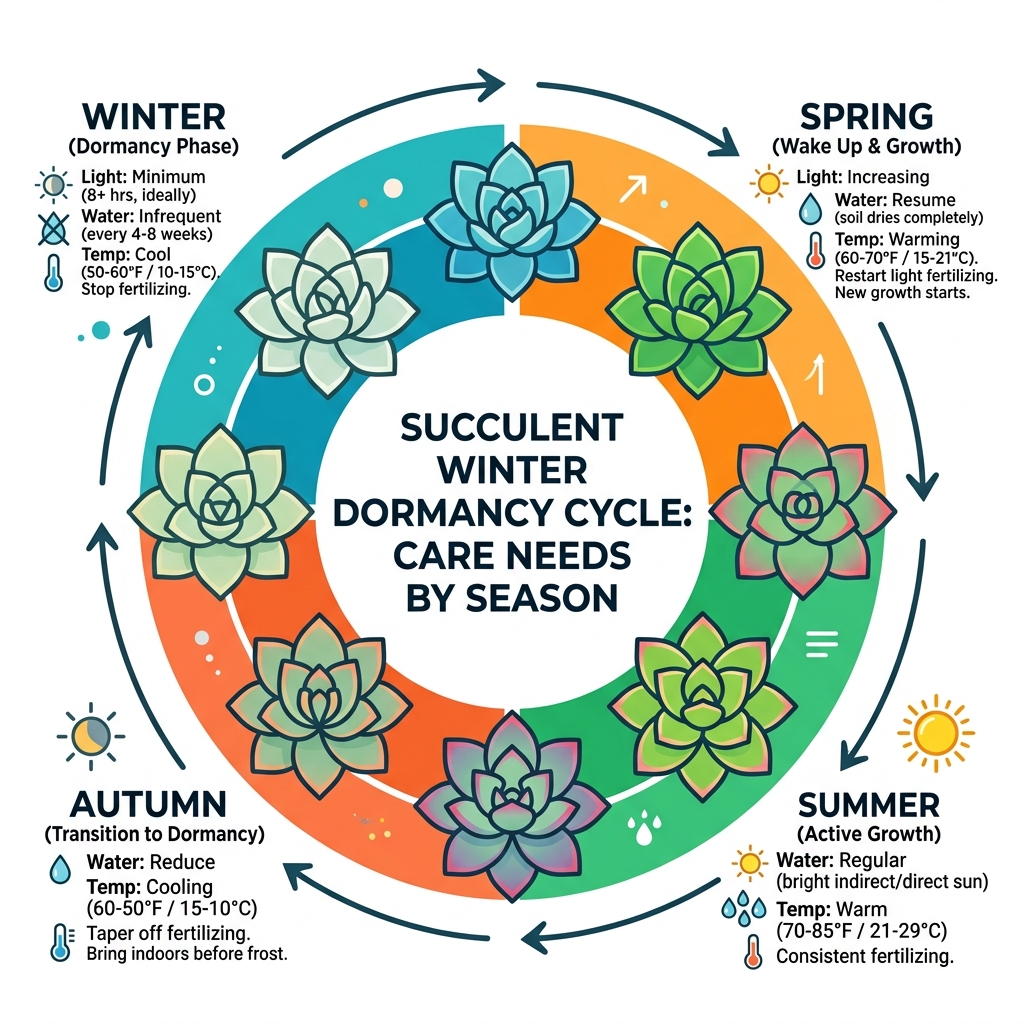
Growing succulents indoors in winter is simpler than most people think — but it does require a few key adjustments to keep your plants alive and healthy through the cold months.
Here’s the short version:
- Move tender succulents indoors before the first frost (typically when nights drop below 50°F)
- Cut back watering to once every 4-8 weeks — most succulents go dormant and need very little moisture
- Give them as much light as possible — at least 6-8 hours daily, ideally near a south-facing window
- Keep temperatures between 50-60°F — cooler than you might expect, but ideal for dormancy
- Stop fertilizing until spring
The biggest mistake people make? Treating succulents the same in winter as they do in summer. Their fleshy leaves store water — and that stored water can freeze, rot, or cause root damage if you’re not careful.
Most succulents aren’t as tough as they look. They come from warm, dry climates with very little rainfall. When winter arrives, shorter days and lower light trigger a natural dormancy cycle. During this rest period, your plants slow down almost everything — growth, water uptake, nutrient absorption. That’s actually a good thing. It’s what keeps them healthy for a vibrant spring.
The good news: once you understand what your succulents need in winter, the care routine becomes refreshingly low-effort.
Preparing Your Plants for the Move Indoors
Before the frost starts nipping at your nose, it’s already likely nipping at your plants. Timing is everything when it comes to growing succulents indoors in winter. We recommend bringing your tender succulents inside well before the first frost. A good rule of thumb is to monitor the nighttime temperatures; once they consistently dip into the 50s°F, it’s time to act.
To ensure you aren’t bringing “guests” inside with you, a little preparation goes a long way. Start by identifying your succulents and determining what growing zone you are in. This helps you distinguish between “hardy” succulents (like Sempervivum) that can stay outside and “tender” ones (like Echeveria or Jade) that need the warmth of your home.
The Pre-Move Checklist
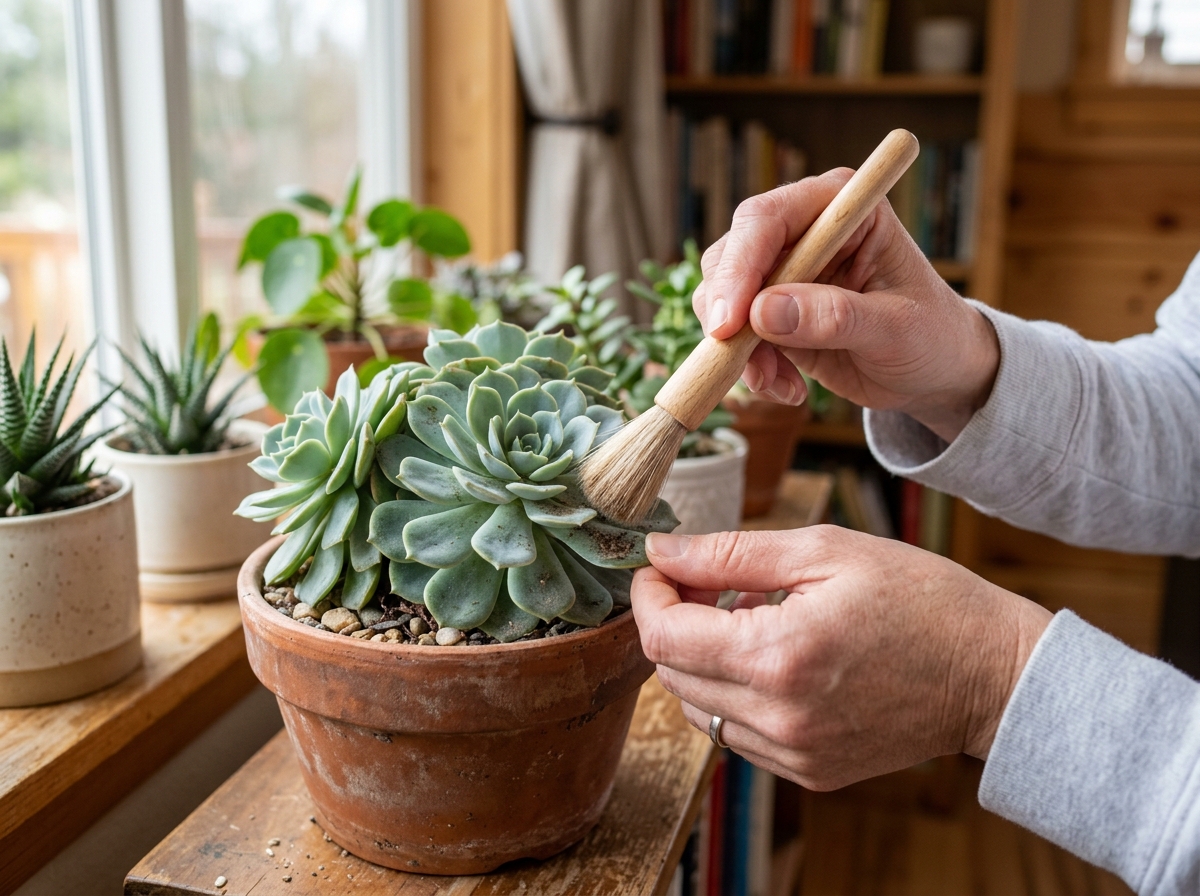
- Clean the Debris: Use a mini garden tool kit to remove dead leaves from the base of the plant. Dead foliage can trap moisture and encourage rot or pests once the plant is in a less ventilated indoor environment.
- Pest Inspection: Check the “armpits” of your plants—the spots where the leaves meet the stem. This is where mealybugs love to hide. If you find white, cottony spots, treat them now so they don’t spread to your other houseplants.
- Water Early: We suggest watering your plants thoroughly 2-3 days before the move. This allows the soil to settle and the plant to hydrate, making the transition less stressful.
- Repotting: If a plant has outgrown its pot over the summer, winter dormancy is actually a fine time to repot into a slightly larger container with fresh soil. Just ensure you aren’t over-potting; succulents prefer a snug fit.
For those just starting out, check out our indoor-succulent-care-tips-for-beginners for a deeper dive into basic plant health.
Growing succulents indoors in winter: Light and Temperature
Light is often the most limiting factor when growing succulents indoors in winter. Outdoors, they might have enjoyed 12 hours of intense sun; indoors, even your brightest window provides significantly less “fuel” for photosynthesis.
Finding the Right Spot
Ideally, you want to place your succulents in a south-facing or west-facing window. These spots receive the most consistent and intense light during the shorter winter days. Most succulents need at least 6-10 hours of bright light daily. If your windows are blocked by trees or eaves, or if you live in a particularly cloudy climate, your plants might start to “stretch.”
Supplementing with Grow Lights
If natural light isn’t cutting it, don’t worry—you can create an “indoor light island.” T-5 fluorescent grow lights are a fantastic option for overwintering. They provide a broad spectrum of light without generating too much heat. Aim to keep the lights on for 6-8 hours a day during the peak of winter. You can even set them on a timer to mimic the natural day-night cycle.
The Temperature Sweet Spot
While we like our homes to be a cozy 70°F, succulents actually prefer it a bit cooler in the winter. An ideal range is between 50-60°F. This cooler temperature helps reinforce their dormancy. When it’s too warm, the plant might try to grow, but without enough light, that growth will be weak and unattractive. Keep them away from drafty doors, but also away from the direct blast of heating vents, which can dry them out too quickly. For more on environmental control, see our guide on indoor-succulent-care-during-winter.
Preventing etiolation when growing succulents indoors in winter
Etiolation is a fancy word for “stretching.” When a succulent doesn’t get enough light, it starts to grow tall and thin, spreading its leaves wide to catch every available photon. While it might look like your plant is “growing fast,” it’s actually a sign of stress.
To prevent this:
- Rotate your pots: Give each plant a quarter turn every time you water (or once a week). This prevents phototropism, where the plant leans toward the light source.
- Use Light Shelves: Professional setups like Gardener’s Supply Co light shelves allow you to stack plants vertically under adjustable lights.
- Spectrum Matters: If using LEDs, look for “full-spectrum” bulbs in the 5500K-6500K range. This mimics natural daylight and keeps your rosettes tight and colorful.
Mastering Winter Watering and Soil Drainage
The number one killer of succulents in winter is the watering can. Because the plants are dormant and the air is often cooler, the soil takes much longer to dry out. If the roots sit in damp soil for weeks, they will rot.
| Feature | Summer Needs | Winter Needs |
|---|---|---|
| Watering Frequency | Every 1-2 weeks | Every 4-8 weeks |
| Light Requirement | 10-12 hours | 6-8 hours |
| Fertilizer | Monthly | None |
| Growth Rate | Active / Fast | Dormant / Slow |
When you do water, use the “soak and dry” method. Pour water onto the soil until it runs out of the drainage holes at the bottom, then wait until the soil is bone-dry before watering again. For many indoor environments, this means watering only once a month.
The Importance of Soil and Pots
The right foundation makes winter care much easier. We highly recommend using a succulent soil mix from Bonsai Jack. It’s incredibly fast-draining, which acts as an insurance policy against overwatering.
Pair this soil with terra cotta pots. Terra cotta is porous, meaning it “breathes” and helps moisture evaporate from the sides of the pot, not just the top. Whatever you choose, ensure the pot has drainage holes. If you have a decorative pot without holes, use it as a “cachepot”—keep the succulent in a plastic nursery liner inside the decorative pot and remove it to water.
Ideal watering schedules for growing succulents indoors in winter
Not all succulents follow the same clock. While most go dormant in winter, some are “winter growers.”
- Aeonium: These are often winter-active. They may need slightly more frequent water than your other succulents.
- Aloe and Echeveria: These typically go dormant and can survive on very little. If the leaves look plump, they don’t need water. If the leaves start to wrinkle slightly, it’s time for a drink.
- The Chopstick Test: Not sure if the soil is dry? Stick a wooden chopstick or skewer deep into the soil. If it comes out clean and dry, water. If it has damp soil clinging to it, wait.
For a more detailed breakdown, check out our indoor-succulent-watering-schedule and our list of indoor-succulents-that-need-little-water.
Managing Pests, Airflow, and Frost Recovery
Indoor air can become stagnant, which is an open invitation for pests and fungus. Mealybugs are the most common winter nuisance. They look like tiny bits of white cotton or lint tucked into the crevices of your plants.
Dealing with Pests
If you spot mealybugs, don’t panic. You can treat them by dabbing them with a Q-tip soaked in 70% isopropyl alcohol. For larger infestations, Bonide Insecticidal Soap is a safe and effective choice. Always isolate the affected plant so the bugs don’t migrate to your entire collection.
The Role of Airflow
Good air circulation is your best defense against fungal issues like powdery mildew. We recommend running a small electric fan in the room where you keep your succulents. It doesn’t need to blow directly on them; just keeping the air moving prevents moisture from settling on the leaves.
Handling Frost Damage
If you accidentally left a plant out during a surprise freeze, you might see mushy, dark, or translucent leaves. This is “frostbite”—the water inside the plant cells froze and burst the cell walls.
- Wait and See: Don’t immediately cut everything off. Give the plant a few days in a warm spot to see what tissue survives.
- Prune the Mush: Once the damage is clear, use clean shears to remove the mushy parts.
- Let it Callous: Allow the cut areas to dry and form a “scab” or callous before you water the plant again.
Transitioning Succulents Back Outdoors in Spring
When the days grow longer and the threat of frost passes, your succulents will be itching to get back outside. However, you can’t just move them from a dim living room to full afternoon sun in one day—they will get a “sunburn,” which appears as permanent white or brown scars on the leaves.
The Hardening Off Process
Transition your plants over a period of 7-14 days:
- Days 1-3: Place them in a fully shaded spot outdoors for a few hours, then bring them back in.
- Days 4-7: Move them to a spot that gets an hour or two of gentle morning sun, then back to shade.
- Days 8-14: Gradually increase their sun exposure by an hour each day.
Keep a close eye on the weather forecast. Even in spring, late freezes can happen. Keep some frost cloth handy to cover your plants on unexpectedly cold nights.
If you find that some of your plants didn’t make it, or you want to expand your collection with tougher varieties, Mountain Crest Gardens specializes in hardy succulents like Sempervivum and Sedum that can handle much colder temperatures. You can also explore our guide on seasonal-care-for-indoor-succulents for more transition tips.
Frequently Asked Questions about Winter Succulent Care
When should I bring my succulents inside for winter?
You should bring them in when nighttime temperatures consistently fall below 50°F (10°C). Most tender succulents will suffer damage if they experience a hard frost (32°F). It is always better to bring them in a week too early than a day too late!
How do I know if my succulent is overwatered in winter?
The most common sign of overwatering is yellowing, translucent leaves that feel mushy to the touch. In extreme cases, the leaves may simply fall off at the slightest bump. If you see black spots on the stem, this is a sign of rot, and you may need to perform “surgery” by cutting the healthy top off and re-rooting it.
Can I use regular LED bulbs as grow lights?
Yes, you can! However, regular household LEDs often lack the specific blue and red light spectrums that plants need for compact growth. Look for “daylight” balanced bulbs (5000K-6500K) and keep them very close to the plants (within 6-12 inches) to be effective.
Conclusion
At Finance Foxx, we believe that gardening should be a source of joy, not stress. Growing succulents indoors in winter is all about adopting a “winter mindset”—learning to appreciate the slow, quiet period of dormancy. By providing plenty of light, keeping the soil dry, and resisting the urge to over-care for your plants, you’ll ensure they return to their full glory in the spring.
Success with succulents comes down to observation. Watch your plants, check the soil, and adjust as needed. If you ever feel overwhelmed by the maintenance of your indoor or outdoor garden, we are here to help. Check out more info about our maintenance services to see how we can help your green space thrive year-round. Happy growing!
