
Winter Care Indoor Succulents Manual
Why Winter Care for Indoor Succulents Can Make or Break Your Plants
Winter care for indoor succulents comes down to a few simple adjustments that most busy plant owners overlook.
Quick answer: How to care for indoor succulents in winter
- Water less – once every 4-6 weeks, only when soil is completely dry
- Maximize light – place near a south-facing window or use a grow light for 12-14 hours daily
- Keep temps stable – aim for 50-75°F and away from cold drafts or hot radiators
- Skip fertilizer – succulents are dormant and don’t need feeding until spring
- Watch for pests – check every 1-2 weeks for mealybugs or spider mites
- Use well-draining soil – in a pot with drainage holes to prevent root rot
Succulents have become a go-to plant for people who want something beautiful without a lot of fuss. Their striking shapes and colors look great on a windowsill or shelf, and they generally ask very little in return.
But winter changes the rules.
As days get shorter and indoor heating kicks in, your succulents enter a natural resting phase called dormancy. Their metabolism slows down. They need less water, less food, and more careful light management. The care habits that kept them thriving in summer can actually kill them in winter.
The most common mistake? Overwatering a dormant plant. As one source puts it, root rot is the number one killer of succulents in winter — and it almost always comes from too much water sitting in cold, slow-drying soil.
The good news is that once you understand what your succulents are going through, the fixes are simple. This guide walks you through everything you need to know.
Transitioning Plants: When to Bring Succulents Indoors
If you’ve been enjoying a vibrant succulent garden on your patio or balcony all summer, the arrival of autumn brings a critical deadline. Unlike many tropical houseplants that show distress gradually, succulents are often full of water; when that water freezes, it expands and destroys the plant’s cellular structure, often leaving you with a pile of mush within days.
The general rule of thumb for winter care indoor succulents is to bring them inside before the first frost. Most experts suggest a 50°F (10°C) threshold. Once nighttime temperatures consistently dip into the low 50s, it’s time to move. While some “hardy” species can survive much lower temperatures, the “tender” varieties most commonly sold in garden centers—like Echeveria, Crassula, and Haworthia—are typically only hardy to USDA hardiness zones 10 or 11.
Before you bring them in, we recommend a thorough inspection. Check the undersides of leaves and the crevices of stems for hitchhikers. Moving plants indoors without a pest check is an invitation for mealybugs to spread to your entire collection. It is also a great time to refresh the soil if it looks compacted or lacks drainage. For more details on managing these transitions, check out our guide on seasonal care for indoor succulents.
Acclimatization is also key. If possible, move your plants to a shaded outdoor area for a few days before bringing them into the lower-light environment of your home. This prevents the “light shock” that can cause sudden leaf drop.
Mastering Winter Care Indoor Succulents: Light and Temperature
Once your plants are safely inside, the two biggest hurdles are light and temperature. In their native arid environments, succulents deal with intense sun and significant day-night temperature swings. Our modern, climate-controlled homes are often the exact opposite: dim and consistently warm.
The Search for Sunlight
The sun sits lower in the sky during winter, and the days are significantly shorter. For winter care indoor succulents, a south-facing window is your best friend. This provides the most hours of direct sunlight available. If a south window isn’t an option, east or west windows are the next best thing, though they may not provide enough intensity for sun-hungry species.
Most succulents need at least 6 to 8 hours of bright light, but in many northern climates, natural light simply isn’t enough. If you notice your plants losing their vibrant colors or turning a pale green, it’s a sign they are struggling. You can find more specific details on sunlight requirements for indoor succulents to help you position your pots perfectly.
Managing the Thermostat
While we might like our homes to be a cozy 72°F, succulents actually prefer it a bit cooler in the winter. Ideally, keeping them in a room that stays between 50°F and 60°F can help encourage a deeper dormancy, which often leads to better flowering in the spring.
However, be careful of the “danger zones.” Placing a succulent on a windowsill where the leaves touch the cold glass can cause frost damage even if the room is warm. Conversely, placing them directly over a radiator or heating vent will dry them out too quickly and may cause heat stress. Aim for a stable, draft-free location.
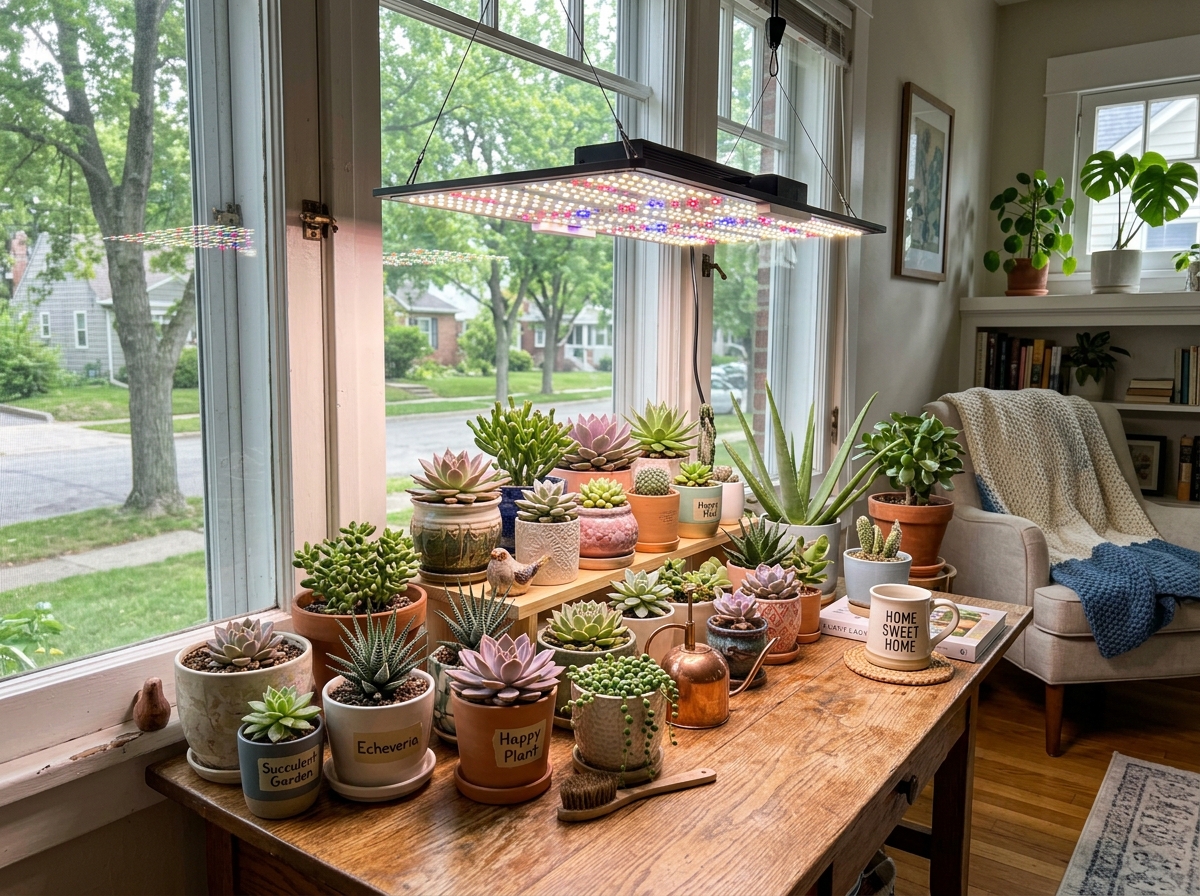
Preventing Etiolation in Winter Care Indoor Succulents
One of the most common sights in winter is a succulent that was once a tight, beautiful rosette suddenly stretching toward the window like a beanstalk. This process is called etiolation. It happens when the plant is “searching” for more light.
Once a succulent stretches, the damage is essentially permanent. While you can “behead” the plant and regrow it in the spring, it’s much easier to prevent it from happening in the first place.
- Weekly Rotation: Give your pots a 90-degree turn every week. This ensures all sides of the plant receive equal light and prevents that unsightly “leaning” look.
- Supplemental Lighting: If your windows aren’t cutting it, we highly recommend LED grow lights. Look for “full-spectrum” bulbs with a color temperature between 5000K and 6500K. These mimic the blue and red wavelengths of natural sunlight.
- Proximity: Position grow lights about 4 to 12 inches above the plants. Keep them on for 12–14 hours a day to compensate for the weak winter sun.
For those just starting out, preventing this stretching is one of the most important indoor succulent care tips for beginners to master.
The Winter Watering Revolution: Less is More
If there is one “golden rule” for winter care indoor succulents, it is this: put the watering can away. Because the plants are dormant and the air is often cooler, they use significantly less water than they do in the summer.
| Feature | Summer Watering | Winter Watering |
|---|---|---|
| Frequency | Every 7–10 days | Every 4–8 weeks |
| Metabolism | Active / High | Dormant / Low |
| Soil Drying Time | 2–3 days | 10–14 days |
| Plant Signal | Soil dry to the touch | Leaves slightly wrinkled |
When you do water, use the “soak and dry” method. Pour water until it runs out of the drainage holes at the bottom, then wait until the soil is bone-dry before even thinking about watering again. You can see a more detailed indoor succulent watering schedule here.
Testing for Dryness
Don’t guess. Use one of these two proven methods:
- The Finger Test: Stick your finger into the soil up to the second knuckle. If you feel any moisture at all, don’t water.
- The Chopstick Trick: Push a wooden chopstick or skewer deep into the pot (avoiding the main root ball). Leave it for a minute and pull it out. If it comes out dark or damp, or with soil clinging to it, the plant is still hydrated. If it’s clean and bone-dry, it’s time for a drink.
Many people worry about their plants “starving” for water, but many indoor succulents that need little water are evolutionarily designed to survive months of drought.
Signs of Overwatering During Winter Care Indoor Succulents
Overwatering is a silent killer because by the time you see the symptoms on the leaves, the roots may already be gone. In winter, the soil stays wet longer, which provides the perfect environment for fungi to attack the roots.
Watch for these red flags:
- Translucent or Yellowing Leaves: If the leaves look “jelly-like” or start turning yellow from the bottom up, the plant is taking in too much water.
- Mushy Texture: Healthy succulent leaves should be firm. If they feel soft or squishy, rot is likely setting in.
- Black Stems: This is a sign of advanced root rot in succulents: identifying causes and solutions are needed immediately to save the plant.
- Foul Smell: If the soil smells like damp basement or rotting vegetables, bacteria have taken over.
If you catch rot early, unpot the plant, trim away any black or slimy roots, let the plant air-dry for a few days until it callouses, and repot it in a fresh, well-draining succulent soil mix.
Maintenance, Pests, and Soil Requirements
Winter is a time for “low-intervention” gardening. While you might be tempted to fuss over your plants, they mostly want to be left alone.
Cleaning and Pruning
As succulents grow, it is normal for the bottom-most leaves to shrivel and die. This isn’t a sign of disease; the plant is simply recycling nutrients for new growth. However, in the stagnant air of a winter home, these dead leaves can trap moisture and attract pests. We recommend using a pair of long tweezers to gently remove this debris. This keeps the base of the plant clean and allows for better air circulation.
Pest Control
Mealybugs are the “arch-nemesis” of the succulent world in winter. They look like tiny bits of white cotton tucked into the joints of the leaves. If you find them, don’t panic. Dip a cotton swab in 70% isopropyl alcohol and dab it directly onto the bugs. For larger infestations, a spray bottle with a mix of water and alcohol (about 1 part alcohol to 3 parts water) can be used. Just be sure to keep the plant out of direct sun while the alcohol dries to prevent burns.
The “No-Fertilizer” Rule
One of the biggest mistakes in winter care indoor succulents is fertilizing. Feeding a dormant plant is, as one expert put it, like force-feeding someone while they are trying to sleep. The plant cannot use the nutrients, which leads to a buildup of salts in the soil that can burn the roots. Save the fertilizer for the first signs of new growth in the spring.
For more maintenance tips, you can explore our library on indoor succulent care during winter.
Frequently Asked Questions about Winter Succulent Care
Should I fertilize my succulents in the winter?
No. Most succulents go dormant during the winter months. Because they aren’t actively growing, they don’t need the extra nutrients. Fertilizing now can lead to “nutrient burn” or weak, “leggy” growth that makes the plant more susceptible to pests. Wait until the days get longer and you see new green leaves appearing in the spring.
How do I know if my succulent is dormant?
Dormancy isn’t always obvious, but you’ll notice a complete halt in growth. The plant won’t produce new leaves, and its water consumption will drop to almost zero. Some varieties, like certain Sempervivums or Echeverias, may even close up slightly or take on deeper “stress colors” like red, purple, or bronze. These colors are actually a sign of a healthy plant reacting to the cooler temperatures and bright light.
Can I repot my succulents during the winter?
Ideally, you should wait until spring. Repotting is a stressful event for a plant—it involves moving roots and adapting to a new environment. Since the plant’s metabolic rate is low in winter, it won’t “settle in” as quickly, making it more vulnerable to rot. The only exception is an emergency repotting if you discover root rot or a pest infestation in the soil.
Conclusion
At Finance Foxx, we believe that anyone can have a “green thumb” if they have the right information. Winter care indoor succulents doesn’t have to be a mystery. By mimicking the cool, dry, and bright conditions of their native homes, you can ensure your plants survive the dark months and come back stronger than ever.
As spring approaches, remember to transition your plants back to the outdoors gradually. This process, called “hardening off,” involves giving them just an hour or two of outdoor sun at first and slowly increasing it over two weeks. This prevents sunburn and allows the plant to wake up from its winter nap safely.
Ready to dive deeper into plant health? Learn more about succulent maintenance and keep your indoor jungle thriving all year round!
