
How to Properly Care for Your Indoor Succulent Garden
Why Indoor Succulent Garden Care Is Easier Than You Think
Indoor succulent garden care is simpler than most people expect — but a few key habits make the difference between thriving plants and struggling ones.
Quick answer: how to care for an indoor succulent garden
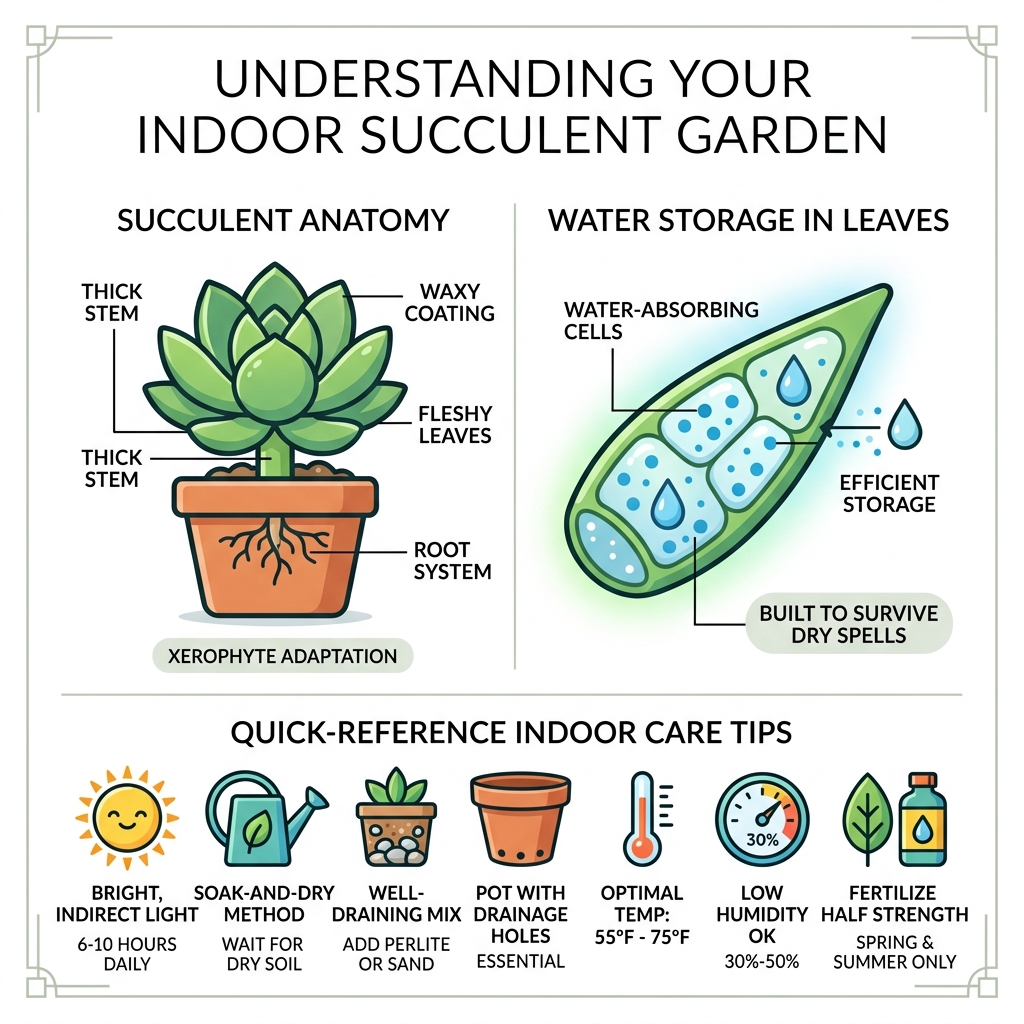
- Light: Place in bright, indirect light for 6-10 hours daily (south or east-facing windows work best)
- Water: Use the soak-and-dry method — water thoroughly, then wait until the soil is completely dry before watering again (every 2-3 weeks)
- Soil: Use a well-draining mix (cactus or succulent-specific soil with added perlite or coarse sand)
- Pots: Always use containers with drainage holes — terracotta is ideal
- Temperature: Keep between 55°F and 75°F
- Humidity: Low humidity (30%-50%) found in most homes is perfect
- Feeding: Fertilize at half strength once a month in spring and summer only
Succulents are built to survive. They store water in their thick leaves and stems, which means they can handle a missed watering far better than most houseplants. With over 10,000 varieties to choose from, there is something to suit every windowsill, shelf, or corner of your home.
They also do more than just look good. Succulents convert harmful VOCs (volatile organic compounds) into nutrients through their roots and release fresh oxygen into your space — making them a quiet upgrade for your indoor air quality too.
The biggest mistakes most people make are overwatering and choosing the wrong soil. Get those two things right, and your succulent garden will practically take care of itself.
Essentials of Indoor Succulent Garden Care
When we talk about indoor succulent garden care, we have to start with the foundation: where the plant lives. Succulents are xerophytes, meaning they are plants adapted to survive in environments with very little liquid water. In the wild, many of these beauties grow in rocky crevices or sandy plains where water drains away instantly. To keep them happy in our living rooms, we must recreate those conditions.
The Power of the Right Pot
One of the most common mistakes we see is planting succulents in beautiful glass terrariums or cute ceramic bowls that lack drainage holes. While they look Pinterest-perfect, they are often “death traps” for succulents. Without a way for excess water to escape, the roots sit in a swamp, leading to the dreaded root rot.
We always recommend terracotta pots for beginners. Terracotta is porous, meaning it “breathes.” This helps pull excess moisture out of the soil and allows for better airflow to the roots. If you do use a decorative ceramic pot, ensure it has at least one large drainage hole at the bottom.
Soil: The Secret Ingredient
You might be tempted to use the bag of “all-purpose” potting soil sitting in your garage, but we urge you to reconsider. Standard potting soil is designed to hold onto moisture—the exact opposite of what a succulent needs.
A well draining soil mix is essential. Ideally, your substrate should be roughly one-third organic matter (like coco coir or peat moss) and two-thirds mineral material. Common mineral additives include:
- Pumice or Perlite: These create air pockets and prevent the soil from compacting.
- Coarse Sand: This helps water move quickly through the pot.
- Gritty Mix: Some experts prefer a soil-less mix made of calcined clay, pine bark, and gravel.
For a deeper dive into choosing the right medium, check out our guide on the best soil for indoor succulents.

Choosing the Right Varieties
Not all succulents are created equal when it comes to indoor living. Some crave the blistering desert sun, while others prefer the dappled shade of a rocky overhang. When selecting plants for your indoor garden, look for “low-light” varieties first.
- Haworthia and Gasteria: These are the champions of the indoors. They stay compact, have fascinating textures (like the “Zebra Plant” stripes), and handle lower light levels much better than their cousins.
- Jade Plant (Crassula ovata): A classic for a reason. They are incredibly hardy and can grow into beautiful miniature trees over time.
- Portulacaria afra variegata: Also known as the Rainbow Bush, this plant adds a splash of cream and green color and is very easy to maintain.
- Echeveria: These are the famous “rosette” shaped succulents. They are stunning but can be “divas” about light. If they don’t get enough, they will stretch out and lose their compact shape.
Optimizing the Environment: Light, Temperature, and Humidity
The environment of your home is generally quite stable, which succulents appreciate. However, because we are growing them behind glass, we need to be strategic about where we place them.
Light Requirements for Indoor Succulent Garden Care
Light is often the most limiting factor for indoor plants. Most succulents need at least six hours of bright light daily. “Bright indirect light” is the sweet spot — this means the light is strong enough to cast a distinct shadow, but the sun’s rays aren’t hitting the leaves directly for hours on end, which can cause “sunburn” (brown, crispy patches).
| Succulent Type | Ideal Light Exposure | Sign of Low Light |
|---|---|---|
| Haworthia / Gasteria | Bright Indirect (East Window) | Leaves turn pale or “stretch” |
| Jade / Aloe | Bright Indirect to Direct (South Window) | Slow growth, drooping leaves |
| Echeveria / Sedum | High Intensity (South Window + Grow Lights) | Etiolation (tall, skinny growth) |
| Snake Plant | Low to Bright Indirect | Very slow growth, thin leaves |
If you notice your plants leaning toward the window or growing tall and skinny with wide gaps between the leaves, they are experiencing “etiolation.” They are literally reaching for the sun. To prevent this, we recommend rotating your pots a quarter-turn every time you water. This ensures all sides of the plant receive equal exposure.
For homes with limited natural light, full-spectrum LED grow lights are a game-changer. Keeping these on for 12-14 hours a day can mimic the intensity of the sun. Some varieties will even “blush” — changing from green to shades of pink, red, or purple — when they receive optimal light. You can find more specific tips in our article on sunlight requirements for indoor succulents.
Temperature and Humidity
Succulents are quite comfortable in the same temperatures we are. They prefer a range of 55°F to 75°F. While some can tolerate a dip down to 45°F or a spike up to 85°F, they generally don’t like sudden fluctuations. Keep them away from drafty windows in the winter and air conditioning vents in the summer.
As for humidity, succulents are the perfect plants for modern homes. They thrive in low humidity (30% to 50%), which is typical for indoor environments. Unlike tropical ferns, you should never mist your succulents. Misting creates a humid microclimate around the leaves that can encourage rot and fungal issues.
Mastering the Watering and Feeding Cycle
If we had to pick one area where most people fail, it’s watering. We’ve all been told that succulents “don’t need much water,” which leads many people to give them tiny sips every few days. This is actually counterproductive.
The “Soak and Dry” Method
In the wild, succulents experience long periods of drought followed by a heavy downpour. We want to mimic that.
- Check the soil: Stick your finger or a chopstick two inches into the soil. If it feels even slightly damp, wait.
- Soak: When the soil is bone-dry, water the plant thoroughly until water runs out of the drainage holes. We like using a watering can with a narrow spout to deliver water directly to the soil, avoiding the leaves.
- Drain: Never let your succulent sit in a saucer of standing water. After watering, wait about 30 minutes and then empty any excess water from the tray.
The frequency of this cycle depends on your home’s light, temperature, and the season. Generally, you’ll find yourself watering every 2-3 weeks in the summer and perhaps once a month in the winter. For more help, see our indoor succulent watering schedule.
Fertilizing for Success
Succulents aren’t heavy feeders, but they do enjoy a little boost during their active growing season (spring and summer). We recommend using a phosphorus-rich fertilizer diluted to half or even quarter strength.
A “balanced” houseplant food (like a 10-10-10 or 15-15-15) works well if diluted properly. Some growers swear by seaweed extract because it contains micronutrients that help with root development. Feed your plants once a month from April through September, and then stop entirely during the winter.
Seasonal Indoor Succulent Garden Care
Just like us, succulents have a rhythm. During the winter, many species go into a semi-dormant state. Because there is less light and the temperatures are cooler, the plant’s metabolism slows down.
- Reduce Water: Since the plant isn’t growing much, it doesn’t need as much fuel.
- Watch the Temperature: Ensure they aren’t touching cold window glass, which can freeze the water inside their leaves.
- No Food: Never fertilize a dormant plant; the salts can build up in the soil and burn the roots.
For a complete seasonal checklist, visit our guide on seasonal care for indoor succulents.
Propagation and Long-Term Maintenance
One of the most rewarding parts of indoor succulent garden care is that these plants are incredibly easy to “multiply.” You can often grow an entirely new plant from a single leaf or a small cutting.
How to Propagate
There are three main ways to expand your garden:
- Leaf Cuttings: Gently twist a healthy leaf off the stem. It must be a “clean pull,” meaning no part of the leaf is left on the stem. Let the leaf sit in a dry spot for 2-3 days until the end “calluses” over. Once callused, lay it on top of some succulent soil. In a few weeks, you’ll see tiny pink roots and a miniature baby plant (a pup) forming!
- Stem Cuttings: If a plant has become “leggy,” you can chop the top off, let the stem callus for a few days, and then stick it back into the soil. It will grow new roots, and the old “stump” will often produce several new pups.
- Offsets: Some succulents, like Aloes and Hens and Chicks (Sempervivum), produce “babies” around the base. You can simply snip these off once they have a few roots of their own and give them their own pot.
Curious about the details? Read our step-by-step on how to propagate succulents indoors.
Repotting and Pruning
Succulents generally like to be a bit “snug” in their pots, but every 2-3 years, they will need a refresh. You’ll know it’s time when you see roots growing out of the drainage holes or the soil becomes so hard that water just runs off the top without soaking in.
When repotting, choose a container only 1-2 inches wider than the current root ball. This prevents having too much excess soil, which could hold onto too much moisture.
Maintenance also includes “housekeeping.” Use a soft brush or a damp cloth to remove dust from the leaves. Dust can block sunlight and reduce the plant’s ability to photosynthesize. Also, don’t be alarmed if the very bottom leaves of your succulent turn brown and crispy — this is a natural part of the growth cycle. Simply pluck them off to keep the plant looking tidy and to prevent pests from hiding in the debris.
Troubleshooting Common Succulent Problems
Even the most attentive plant parents run into trouble occasionally. The key is to catch the signs early.
The Warning Signs
- Yellow, Mushy Leaves: This is the classic sign of overwatering. If the leaves feel like a water balloon and fall off at the slightest touch, you likely have root rot. Stop watering immediately and check the roots. Healthy roots are white or tan; rotten roots are black and slimy.
- Shriveled, Wrinkled Leaves: This is the plant’s way of saying it’s thirsty. If the soil is dry and the leaves look like raisins, give it a good soak.
- Brown, Crispy Patches: This is usually sunburn. Move the plant slightly further away from the window or provide a sheer curtain to filter the light.
- Tall, Stretched Growth: As mentioned, this is a cry for more light. You can “behead” the plant to reset its shape and move it to a sunnier spot.
Dealing with Pests
Indoor succulents are generally hardy, but they can occasionally attract unwanted guests.
- Mealybugs: These look like tiny bits of white cotton fluff hiding in the nooks and crannies of the leaves. They suck the sap out of the plant. The best treatment is a cotton swab dipped in 70% rubbing alcohol. Dab the bugs directly to kill them.
- Fungus Gnats: These tiny black flies buzz around the soil. They are usually a sign that your soil is staying too wet. Letting the soil dry out completely and using a layer of gravel on top can help break their life cycle.
- Spider Mites: If you see tiny webs between the leaves, you might have mites. Neem oil or insecticidal soap can help clear them up.
For more detailed strategies, see our guide on indoor succulent pests and treatments.
Frequently Asked Questions about Indoor Succulents
How often should I water my indoor succulents?
There is no “one size fits all” answer, but a good rule of thumb is every 2-3 weeks during the summer and every 3-4 weeks in the winter. Always use your finger to test the soil first. If it’s not dry at least two inches down, don’t water!
Why is my succulent getting tall and skinny?
This is called etiolation. Your plant isn’t getting enough light and is stretching out to find some. Move it to a brighter window or supplement with a grow light. You can prune the tall growth and propagate the top to get back to a compact shape.
Do succulents need direct sunlight to survive indoors?
Most succulents prefer bright, indirect light. While some desert-native cacti can handle direct sun through a window, many succulents will actually burn if the light is too intense. A south-facing window with a sheer curtain is often the perfect balance.
Conclusion
At Finance Foxx, we believe that anyone can master indoor succulent garden care. These plants are the ultimate “thrive on neglect” companions, asking for very little in exchange for their architectural beauty and air-purifying benefits.
By focusing on the “Big Three” — drainage, light, and the soak-and-dry watering method — you can create a vibrant, healthy indoor oasis. Remember to observe your plants; they will tell you what they need through their colors and textures. Look for firm leaves, vibrant hues, and steady growth as signs of success.
If your collection has grown beyond your control or you need expert help setting up a large-scale display, we are here to help. Explore more info about succulent maintenance services to keep your green friends in peak condition year-round. Happy planting!
