
How to Grow and Keep Succulents Indoors Like a Pro
Why Succulents Are the Perfect Low-Maintenance Indoor Plant
The best way to care for succulents indoors comes down to a few simple rules: give them plenty of bright light, water deeply but infrequently, use fast-draining soil, and choose a pot with drainage holes.
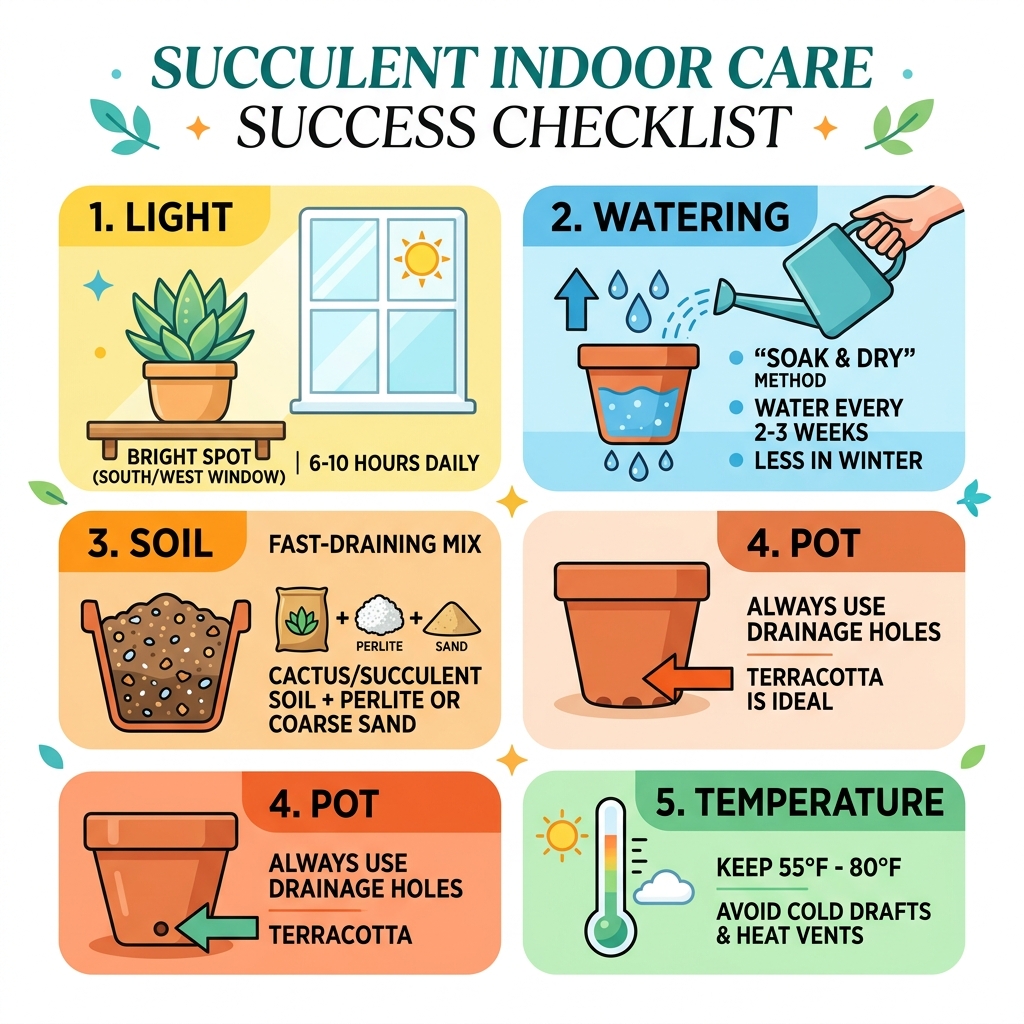
Here’s a quick-reference checklist to get you started:
- Light – Place in a bright spot (south- or west-facing window) for 6-10 hours daily
- Watering – Use the “soak and dry” method; water every 2-3 weeks, less in winter
- Soil – Use a cactus/succulent mix or blend with perlite or coarse sand
- Pot – Always use a container with drainage holes; terracotta is ideal
- Temperature – Keep between 55°F and 80°F; avoid cold drafts and heat vents
- Fertilizer – Feed at half-strength once a month in spring and summer only
- Pests – Check regularly; treat mealybugs with rubbing alcohol
Succulents have become one of the most popular houseplants around — and it’s easy to see why. They look striking, come in over 10,000 varieties, and are genuinely forgiving for busy people who don’t have time to fuss over plants every day.
Their secret? They store water in their thick, fleshy leaves and stems. This means they can handle some neglect — skipping a watering or two won’t kill them. That makes them perfect for urban homeowners who want beautiful greenery without a complicated routine.
But “low maintenance” doesn’t mean “no maintenance.” A few simple habits make the difference between a succulent that just survives and one that genuinely thrives indoors.
This guide covers everything you need to know, from light and watering to pests and propagation.
The Best Way to Care for Succulents Indoors: Lighting and Varieties
When we bring these desert-dwelling beauties into our homes, the biggest challenge is often recreating the vast, sun-drenched landscapes they call home. Outdoors, a succulent might bask in six hours of direct sun, but indoors, the glass in our windows filters that energy. To compensate, indoor succulents generally need ten or more hours of bright, indirect light daily to stay healthy.
The best way to care for succulents indoors regarding light is placement. We always recommend a south-facing window if you have one, as this provides the most consistent intensity throughout the day. West-facing windows are a close second, though the afternoon sun can sometimes be a bit harsh. If your plant is sitting on a sunny windowsill, remember to rotate the pot a quarter turn every week. Without rotation, the plant will lean toward the glass, leading to a lopsided, “reaching” appearance.

When succulents don’t get enough light, they suffer from a condition called etiolation. This is when the plant stretches out, creating wide gaps between the leaves as it desperately “hunts” for a light source. If you notice your compact rosette starting to look like a tall beanstalk, it’s time to move it to a brighter spot. You can learn more about fixing this in our detailed guide on preventing succulent stretching.
Ideal Light Requirements and Signs of Light Stress
How do you know if the light is “just right”? You can use the “shadow test.” If the light is bright enough to cast a sharp, well-defined shadow, your succulent is likely happy. However, keep an eye out for “blushing.” Some succulents, like the Echeveria, will change colors to shades of pink, red, or purple when they receive optimal light. It’s not because they’re shy; it’s a sign they are thriving!
On the flip side, too much of a good thing can lead to sun scorch. If you see beige or white patches on the leaves that feel crispy, your plant is getting “sunburned.” This often happens if you move a plant suddenly from a dark corner to a blistering window without acclimating it. Conversely, if the leaves are turning a pale, dull green and the plant looks “leggy,” it is starving for more sun. For more scientific insights on indoor light levels, the Iowa State University Extension provides excellent data on supplemental lighting.
Beginner-Friendly Varieties and Temperature Needs
If you are just starting your indoor garden, we suggest picking varieties that are naturally adapted to lower light or stable indoor temperatures. Some of our favorites include:
- Aloe vera: Famous for its healing sap and very hard to kill.
- Jade Plant (Crassula ovata): Often called the “Money Tree,” these can live for decades.
- Zebra Plant (Haworthiopsis attenuata): A petite beauty that only grows about 5 inches tall and handles lower light better than most.
- Snake Plant (Sansevieria): The ultimate “set it and forget it” plant.
In terms of temperature, most indoor succulents are comfortable in the same range we are: 55°F to 80°F. They appreciate a slight drop in temperature at night, which mimics the desert environment and can even trigger flowering in some species. Just be careful to keep them away from drafty air conditioners in the summer or scorching heater vents in the winter. For more variety-specific tips, check out our Echeveria care guide or our list of low-maintenance succulents.
Mastering the “Soak and Dry” Watering Technique
If there is one “golden rule” for the best way to care for succulents indoors, it is this: stop misting them. Succulents evolved to survive in places where it rains heavily and then stays bone-dry for weeks. Misting only increases humidity around the leaves, which can lead to rot or fungal issues. Instead, we use the “soak and dry” method.
To do this correctly, wait until the soil is completely dry from the top all the way to the bottom. You can use the “finger test” — stick your finger two inches into the soil; if you feel any moisture at all, wait. When it is finally dry, pour water directly onto the soil (avoiding the leaves) until it runs out of the drainage holes at the bottom. This encourages the roots to grow deep and strong. For a more tailored approach, see our indoor succulent watering schedule.
Identifying Overwatering vs. Underwatering Signs
Your succulent will talk to you if you know what to look for.
- Overwatering: This is the #1 succulent killer. If the leaves look yellow, translucent, or feel “mushy” to the touch, the plant is taking on too much water. In extreme cases, the stem will turn black — a sign of root rot.
- Underwatering: If the leaves look shriveled, wrinkled, or puckered like a raisin, the plant is thirsty. Interestingly, succulents usually drop their bottom leaves naturally as they grow, but if the top leaves are shriveling, it’s time for a drink.
Avoid the common watering mistakes by always checking the soil rather than sticking to a strict calendar.
Best Way to Care for Succulents Indoors During Winter
During the winter months, succulents enter a period of dormancy. Because there is less light and the air is cooler, they don’t need as much energy to grow. Consequently, they need much less water.
While you might water every 2 weeks in the summer, you should scale back to once every 4 to 6 weeks in the winter. They also prefer slightly cooler temperatures during this time, ideally between 50°F and 60°F, to rest properly. We’ve put together a full guide on winter succulent care to help your plants survive the dark months, as well as broader seasonal care tips.
Choosing the Right Soil, Pots, and Repotting
The container you choose is just as important as the plant itself. We cannot stress this enough: your pot must have a drainage hole. Without one, water sits at the bottom, creating a “swamp” that will rot your roots in days.
| Pot Material | Pros | Cons |
|---|---|---|
| Terracotta | Porous, allows soil to breathe and dry quickly. | Heavy, can break if dropped. |
| Ceramic (Glazed) | Beautiful designs, holds some moisture. | Doesn’t breathe as well as terracotta. |
| Plastic | Lightweight, very affordable. | Retains moisture longer; easy to overwater. |
| Glass | Modern look. | Not recommended; no drainage or airflow. |
For the best way to care for succulents indoors, we almost always recommend terracotta. Its porous nature helps wick excess moisture away from the roots, providing a safety net for beginners. You can find more advice on choosing the best pot in our hardware section.
The Best Soil and Pot Combinations for Drainage
Standard potting soil is designed to hold onto moisture — which is exactly what a succulent hates. To keep your plants happy, use a dedicated cactus and succulent soil mix. These mixes contain higher amounts of mineral materials like perlite, pumice, or coarse sand.
If you want to mix your own, a good ratio is one-third organic material (like compost or coco coir) and two-thirds mineral material. This creates the “gritty” texture that allows air to reach the roots. As the experts at the Boyce Thompson Arboretum point out, roots need oxygen just as much as they need water.
When and How to Repot Your Succulents
You don’t need to repot succulents often. In fact, they quite like being a little “snug” in their pots. However, you should consider repotting if:
- Roots are growing out of the drainage hole.
- The plant has become so top-heavy it keeps tipping over.
- The soil has become “hydrophobic” (water just runs off the top without soaking in).
When repotting, choose a container only 1 to 2 inches wider than the current one. If the pot is too large, the excess soil will hold onto too much water. For a walkthrough of the process, see our step-by-step repotting guide.
Troubleshooting Pests, Fertilizer, and Propagation
Even the most careful plant parent will occasionally run into trouble. The key is catching problems early.
The most common indoor pests are mealybugs. These look like tiny bits of white fluff or cotton wool hiding in the nooks of the leaves. If you see them, don’t panic! Simply dip a cotton swab in rubbing alcohol and dab them directly. For larger infestations, a spray of neem oil or a mixture of water and alcohol usually does the trick. You can read more about treating indoor pests and preventing diseases on our health resource pages.
Best Way to Care for Succulents Indoors with Fertilizer
Succulents aren’t “heavy feeders.” In the wild, they grow in nutrient-poor soil, so they don’t need much help. However, a little boost during the growing season (spring and summer) can help them produce vibrant colors and even flowers.
We recommend using a balanced, water-soluble fertilizer diluted to half-strength. Feed them once a month from April through September. When the weather cools down in the fall, stop fertilizing entirely to let the plant rest. Learn the specifics in our guide on how to fertilize succulents indoors.
Common Pests and Propagation Methods
One of the most rewarding parts of succulent care is propagation — making new plants for free! Most succulents are incredibly easy to multiply using three main methods:
- Leaf Cuttings: Gently twist a healthy leaf off the stem (make sure it’s a clean break!). Let it “callous” over for a few days, then lay it on top of some soil. In a few weeks, tiny pink roots and a miniature plant will appear.
- Stem Cuttings: If your plant has become leggy, snip the top off, let the end dry out, and stick it back into the soil.
- Offsets (Pups): Some plants, like Aloe or Hens and Chicks, grow “babies” around the base. You can simply snip these off and give them their own pot.
For a deep dive into these techniques, check out our indoor propagation guide.
Conclusion
At Finance Foxx, we believe that bringing nature indoors shouldn’t be a source of stress. The best way to care for succulents indoors is to observe your plants and react to what they tell you. By providing bright light, the right soil, and a “soak and dry” watering routine, you can keep these architectural wonders thriving for years.
Daily Care Summary:
- Check the light: Is it reaching? Rotate it.
- Check the soil: Is it dry? Water it.
- Check the leaves: Are they mushy or shriveled? Adjust your routine.
- Keep it clean: Wipe dust off the leaves with a damp cloth so they can “breathe.”
For more help with your indoor garden or professional assistance with larger plant installations, explore our maintenance services.
Common Beginner Mistakes to Avoid
- Misting: It doesn’t help and often causes rot.
- Glass Containers: Terrariums look cool but usually lack drainage and airflow.
- Over-fertilizing: This can lead to weak, “stretched” growth known as growth problems.
- Using “Standard” Potting Soil: It holds too much water; always go for the gritty stuff!
How often should I water my indoor succulents?
There is no set “every Tuesday” rule. Use the finger test to ensure the soil is dry at least two inches down. Typically, this means watering every 2-3 weeks in the summer and every 4-6 weeks in the winter.
Do succulents need direct sunlight?
Most succulents love bright, indirect light. While they can handle some direct morning sun, the intense afternoon sun through a glass window can sometimes burn the leaves. Aim for a bright, sunny room with 6-10 hours of light for the best results.
