
The Best Pest Prevention Routine for Indoor Houseplants
Why Indoor Succulent Pest Prevention Is Worth Your Attention
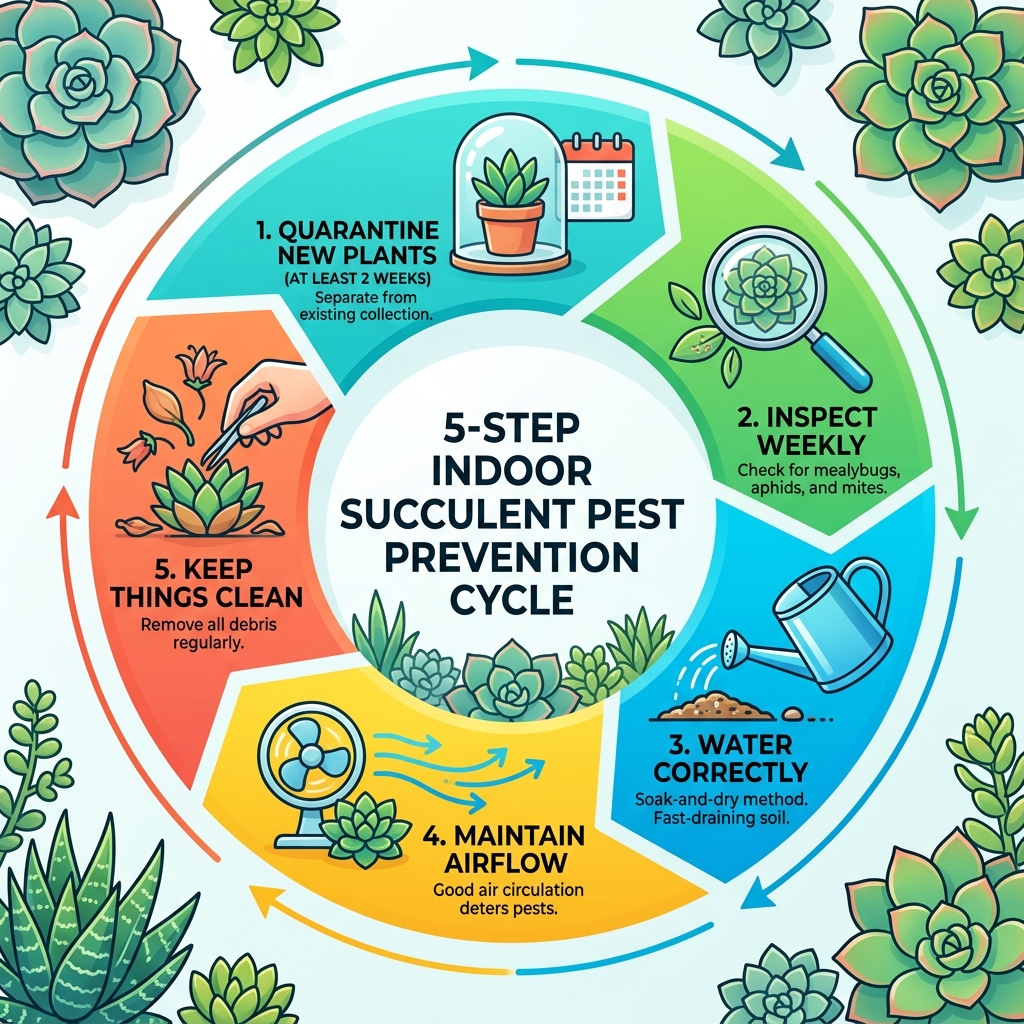
Indoor succulent pest prevention comes down to a handful of simple habits that stop problems before they start. Here’s a quick overview:
The 5 core steps to prevent pests on indoor succulents:
- Quarantine new plants for at least 2 weeks before placing them near your collection
- Inspect weekly – check leaf joints, rosette centers, and soil for early signs of trouble
- Water correctly – use the soak-and-dry method and fast-draining soil to avoid moisture buildup
- Maintain airflow – good air circulation deters spider mites and other pests
- Keep things clean – remove dead leaves, spent blooms, and debris regularly
Succulents have a reputation for being tough. And they are. But tough doesn’t mean immune.
Even the most resilient succulent can fall victim to sap-sucking insects like mealybugs, aphids, and spider mites – especially indoors, where there are no natural predators to keep pest populations in check.
The good news? Most pest problems on indoor succulents are entirely preventable with a consistent, low-effort routine. You don’t need a cabinet full of chemicals or hours of weekly maintenance.
A few minutes of attention each week is genuinely enough to protect your plants.
Identifying Common Indoor Succulent Pests
Before we can master indoor succulent pest prevention, we need to know exactly who the “usual suspects” are. In the cozy, climate-controlled environment of our homes, certain pests thrive because they face no wind, rain, or hungry ladybugs.
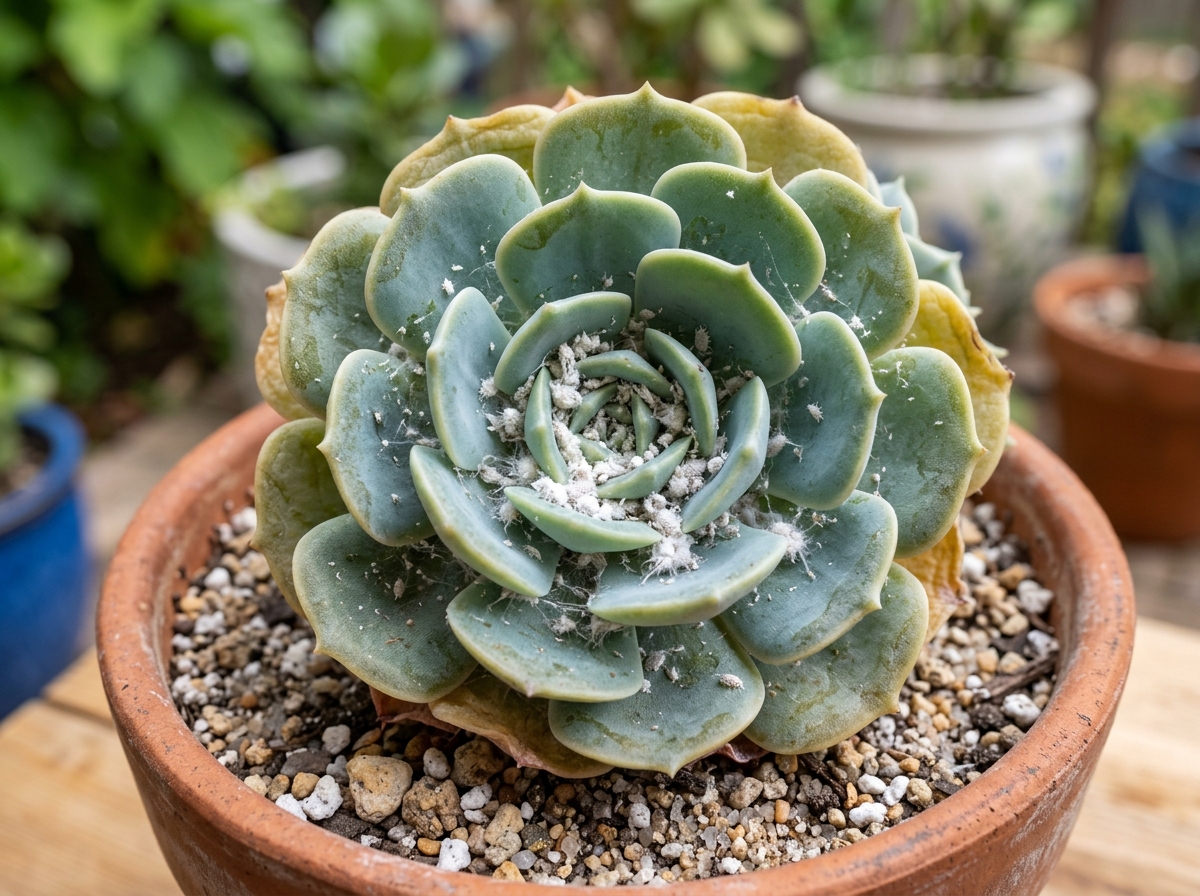
The most notorious villain is the mealybug (family Pseudococcidae). These tiny insects look like small bits of white lint or cotton wool huddled in the crevices of your plants. They suck the life-giving sap from the leaves, causing them to yellow and eventually drop.
Other common invaders include:
- Scale Insects: These look like small, brown, immobile bumps on stems or leaves. They have an armored shell that makes them particularly stubborn.
- Spider Mites: Belonging to the Tetranychidae family, these are nearly invisible to the naked eye. They are arachnids, not insects, and they leave behind fine, silky webbing.
- Aphids: Often called “sap-suckers,” these pear-shaped insects can be green, black, or even orange. They love the tender new growth and flower buds of succulents.
- Fungus Gnats: These look like tiny black flies hovering around the soil. While the adults are mostly an annoyance, their larvae live in the soil and can munch on delicate root hairs.
- Whiteflies: Small, moth-like insects that flutter away when you disturb the plant. Like aphids, they produce a sticky substance called “honeydew.”
When these pests feed, they often excrete honeydew, which can lead to the growth of black sooty mold. You might also notice “stippling”—tiny yellow or white dots on the leaves where a pest has pierced the plant cells. For more on spotting these early, check out our guide on indoor succulent pests and treatments.
Early Warning Signs of Infestation
You don’t always need to see a bug to know you have a problem. Often, the plant speaks to us through subtle changes. Sticky residue on the leaves (honeydew) is a major red flag. If you see white, cottony clusters tucked into the leaf joints, you’ve likely got mealybugs.
Other signs include unexplained yellowing leaves, distorted new growth, or very fine webbing stretching between the leaves. Catching these signs early is the secret to successful indoor succulent pest prevention.
Soil-Dwelling Threats to Succulents
Some of the most dangerous pests are the ones we can’t see. Root mealybugs are cousins to the common mealybug but live entirely underground, sucking sap from the roots. This often leads to a plant that looks thirsty or “shriveled” even after you’ve watered it. Similarly, fungus gnat larvae thrive in consistently damp soil, causing root damage that mimics the signs of root rot.
| Symptom | Root Pests (Mealybugs/Gnats) | Overwatering (Rot) |
|---|---|---|
| Leaf Texture | Shriveled, rubbery, or dull | Mushy, translucent, or yellow |
| Soil Condition | May be dry or damp | Usually stays wet for too long |
| Visible Signs | White “ashy” spots on roots | Black, slimy roots with a foul smell |
| Plant Stability | Plant remains firm in soil | Plant may feel “wobbly” or fall over |
The Golden Rule of Indoor Succulent Pest Prevention: Quarantine and Inspection
If we could give you only one tip for indoor succulent pest prevention, it would be this: Always quarantine new arrivals.
When you bring a new plant home from a nursery or big-box store, it might be carrying “hitchhikers” that aren’t visible yet. We recommend a 14-day isolation period in a completely separate room. If that isn’t possible, keep the new plant at least 2 yards away from your existing collection. This prevents crawlers like mealybugs from making the trek to your healthy plants. For a deeper dive into why this matters, read about the causes of indoor succulent pests.
Creating a Weekly Routine for Indoor Succulent Pest Prevention
We find that the best way to stay on top of things is to turn inspection into a ritual. Perhaps it’s during your Saturday morning coffee. Take five minutes to look closely at your plants.
Focus on the “hiding spots”: the leaf joints, the very center of rosettes, and under the leaves. A small magnifying glass can be a game-changer here, helping you spot the tiny translucent eggs of spider mites or the first few aphids before they become a colony. Consistent checking is a core part of beginner succulent care.
Hygiene and Maintenance Standards
A clean garden is a healthy garden. Pests love to hide and breed in dead plant matter. We make it a habit to remove dead leaves from the base of the plant as soon as they shrivel. If a succulent has finished blooming, cut off the spent bloom stalks, as these are “pest magnets” for aphids.
Always use sterilized tools when pruning. A quick wipe with rubbing alcohol prevents the spread of diseases. Also, don’t forget to wipe down the outside of your pots and the saucers they sit in to remove any hidden eggs or sticky honeydew. This is an essential step in combatting succulent diseases.
Cultural Practices for Long-Term Prevention
The best defense against pests is a healthy plant. Pests are naturally drawn to stressed or weakened succulents. By providing the right environment, you make your plants much less “tasty” to invaders.
One of the biggest mistakes is watering too frequently. We always recommend the soak-and-dry method: water the soil thoroughly until it drains out the bottom, then wait until the soil is bone-dry all the way through before watering again. This prevents the damp conditions that fungus gnats adore. Learn more about indoor cactus and succulent care to master these basics.
Managing Humidity and Airflow
Spider mites thrive in hot, dry, stagnant air—exactly the kind of environment found in many homes during winter when the heater is on. To deter them, we suggest using a small oscillating fan to keep air moving around your plants. Good ventilation not only prevents pests but also helps the soil dry out faster. While some tropical plants love humidity trays, most succulents prefer lower humidity to prevent fungal issues. More tips can be found in our care guides.
Soil Management and Drainage
Your soil choice is a vital part of indoor succulent pest prevention. Standard potting soil holds too much moisture. We prefer a gritty mix containing perlite or pumice. This ensures that water moves through quickly.
Always use pots with drainage holes. If you’re unsure if the soil is dry, a moisture meter is a fantastic tool to have in your kit. It takes the guesswork out of watering and keeps those moisture-loving pests at bay. Proper soil is the foundation of successful succulent growing.
Natural Deterrents and Organic Prevention Strategies
Sometimes, despite our best efforts, a pest might slip through. In these cases, we prefer starting with organic methods.
- 70% Isopropyl Alcohol: This is our “secret weapon.” It kills mealybugs and aphids on contact by dissolving their protective waxy coating. You can dab individual bugs with a Q-tip or use a spray bottle for larger areas.
- Neem Oil: This is a natural oil from the neem tree that acts as a repellent and disrupts the life cycle of many pests. Pro tip: Always apply neem oil at night or in the evening to avoid sunburn on the leaves.
- Insecticidal Soap: A gentle way to wash away soft-bodied insects.
For severe cases, some growers use insecticidal granules or a systemic soil drench like BioAdvanced or Monterey Systemic Soil Drench. These are absorbed by the plant, making the sap toxic to pests for several weeks.
Using Worm Castings for Indoor Succulent Pest Prevention
Worm castings are more than just a great organic fertilizer; they are a powerful preventive tool. They contain an enzyme called chitinase. When a plant absorbs this enzyme through its roots, it becomes unappealing to sap-sucking insects because it breaks down the chitin in their exoskeletons. Adding a few tablespoons of worm castings to your soil mix provides a long-term, systemic layer of protection while also supplying over 60 micronutrients.
Inorganic Top Dressings as a Barrier
Adding a layer of aquarium gravel, lava rock, or pebbles to the top of your soil isn’t just for looks. This “top dressing” acts as a physical barrier. It prevents fungus gnats from reaching the moist organic matter in the soil to lay their eggs. It also helps keep the base of the succulent dry, preventing rot and discouraging soil-dwelling pests from emerging.
Frequently Asked Questions about Indoor Succulent Pest Prevention
How long should I quarantine new succulents?
We recommend at least 14 days, though 21 days is even safer. This gives enough time for any hidden eggs to hatch and become visible. During this time, inspect the plant every few days.
Can overwatering cause pest problems indoors?
Absolutely. Overwatering is the primary cause of fungus gnat infestations. It also weakens the plant’s cell walls, making it easier for aphids and mealybugs to pierce the leaves and feed.
Is rubbing alcohol safe for all succulents?
Most succulents handle 70% isopropyl alcohol very well. However, some species with heavy “farina” (the powdery wax on the leaves) can be permanently spotted by alcohol. We always suggest testing a single leaf first and waiting 24 hours to see if there is any adverse reaction.
Conclusion
Mastering indoor succulent pest prevention doesn’t require a degree in entomology. It simply requires a shift in mindset: seeing prevention as part of the joy of plant care rather than a chore. By implementing a strict quarantine for newcomers, maintaining a simple weekly inspection routine, and providing the gritty soil and “soak-and-dry” watering your plants crave, you create an environment where pests simply cannot thrive.
At Finance Foxx, we believe that a healthy indoor garden brings peace and beauty to any home. By being proactive and using these integrated pest management strategies, you ensure your green friends remain vibrant and pest-free for years to come.
