
How to Grow a Lush String of Pearls Without the Drama
What You Need to Know About String of Pearls Care
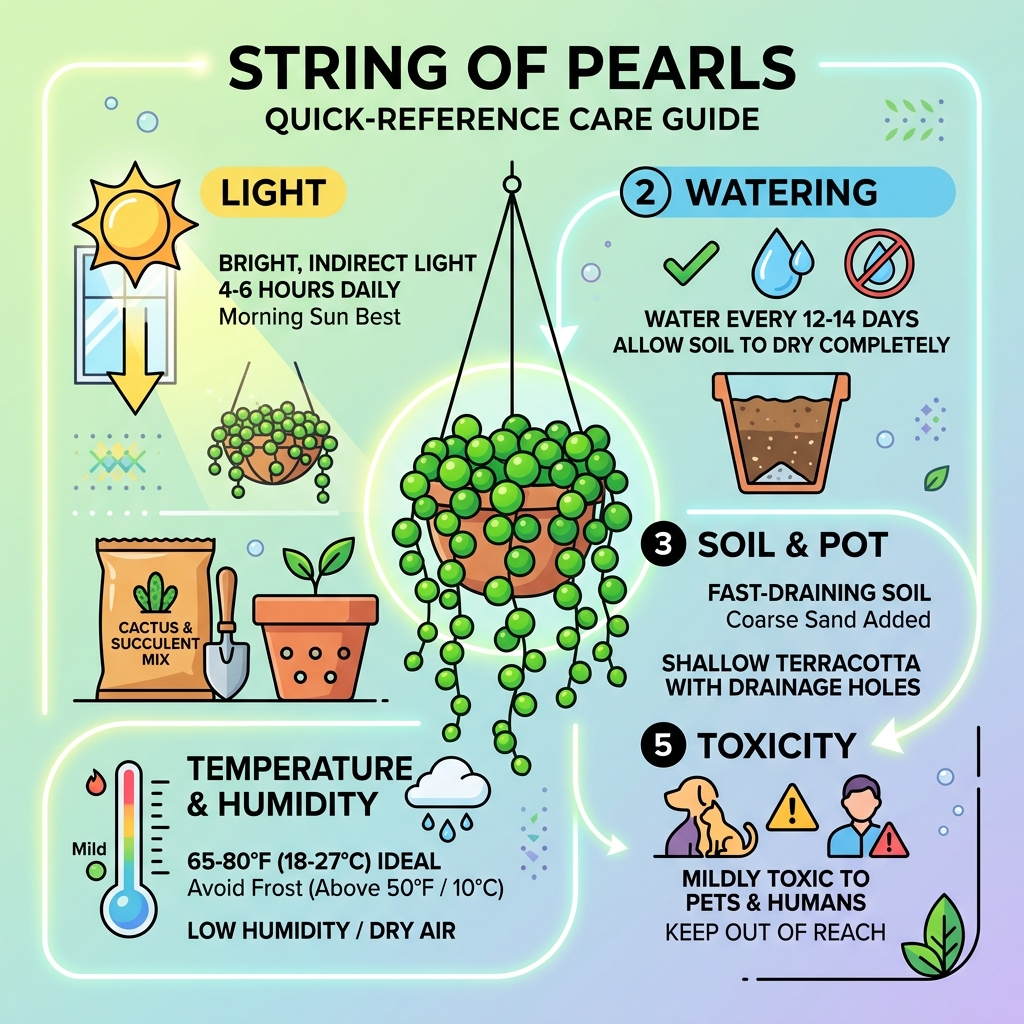
String of pearls care comes down to a few simple rules: bright light, infrequent watering, fast-draining soil, and leaving the plant alone more than you think you should.
Here’s a quick-reference summary:
| Care Factor | What to Do |
|---|---|
| Light | 4-6 hours of bright light daily, ideally with morning sun |
| Watering | Every 12-14 days; let soil dry out completely between waterings |
| Soil | Cactus or succulent mix with added coarse sand |
| Pot | Shallow terracotta with drainage holes |
| Temperature | 65-80°F (18-27°C); keep above 50°F in winter |
| Humidity | Low; dry air is best |
| Fertilizer | Half-strength liquid feed, once a month in spring and summer |
| Repotting | Every 2-3 years |
| Toxicity | Mildly toxic to pets and humans — keep out of reach |
The String of Pearls (Curio rowleyanus) is one of those plants that looks like it demands expert-level care. Those cascading strings of perfect little green beads seem almost too elegant to be low-maintenance.
But here’s the thing: it’s actually one of the more forgiving succulents you can own.
It comes from the arid, rocky terrain of South Africa, where it sprawls across the ground in dry heat with very little water. That heritage means it’s built to survive neglect — as long as you get the basics right.
The most common reason people struggle with it? Too much water and not enough light. Get those two things right, and the rest is straightforward.
Know your string of pearls care terms:
The Fundamentals of String of Pearls Care
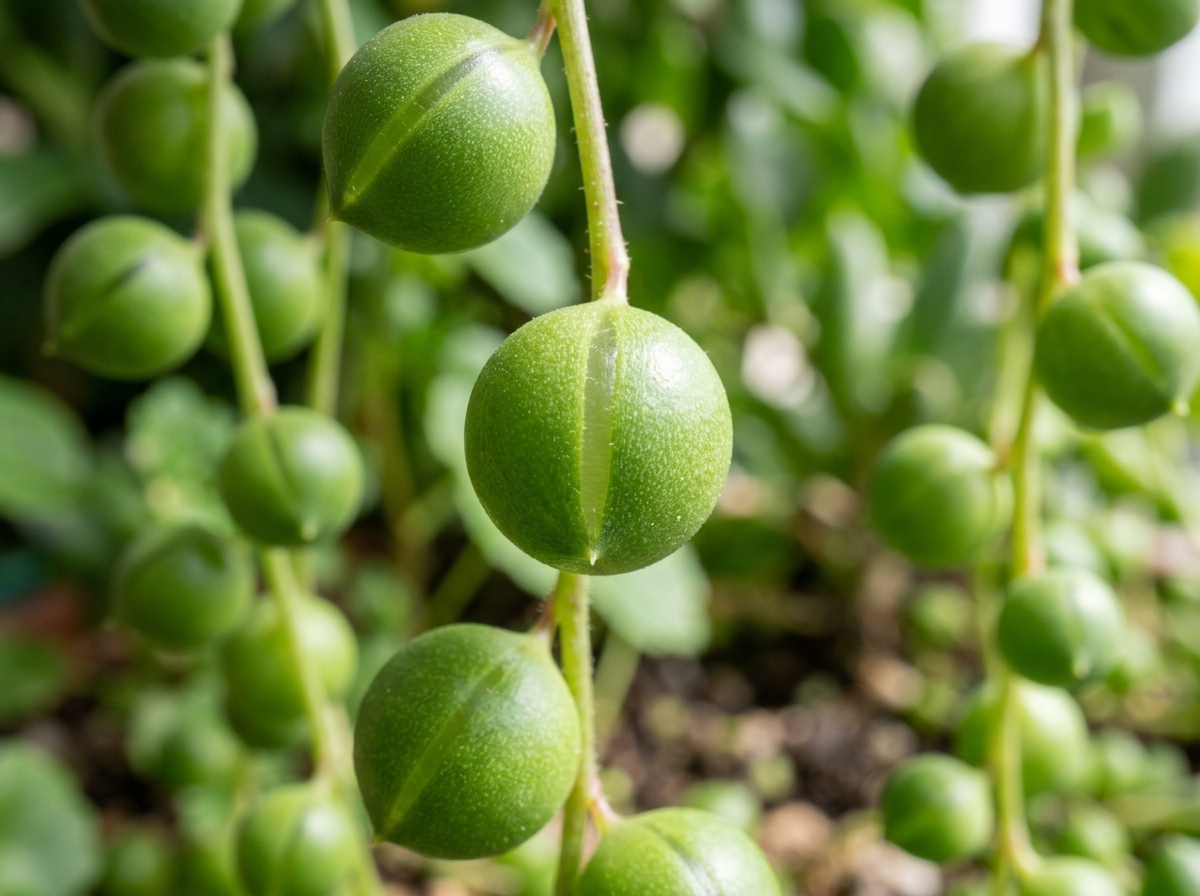
To understand how to keep this plant happy, we have to look at its “secret weapon.” If you look closely at a single pearl, you’ll notice a tiny, translucent slit. This is called an epidermal window. In its native South African habitat, the plant often grows partially buried in sand to stay cool. These windows allow sunlight to reach the interior of the leaf for photosynthesis even when the plant is hunkered down. Nature is pretty clever, right?
When we bring them into our homes, we need to respect that desert ancestry. According to the Curio rowleyanus | North Carolina Extension Gardener Plant Toolbox, this plant thrives in bright, indirect light. We recommend aiming for at least 4 to 6 hours of bright light daily.
Light and Location
The biggest mistake we see is placing the plant in a spot where the trailing vines get light, but the top of the pot stays in the dark. This leads to “balding” at the crown. To prevent this, ensure light hits the top of the plant. A shelf that is too high or a deep corner can cause the base to thin out. If you’re just starting out, check out our indoor succulent care tips for beginners to get your lighting layout just right.
Temperature and Humidity
These plants are big fans of the “room temperature” life. They prefer a range between 65°F and 80°F (18-27°C). While they can handle temperatures as low as 50°F in the winter, they aren’t frost-tolerant. As for humidity, they prefer it dry. Unlike your tropical ferns, you should never mist a String of Pearls. High humidity or wet leaves can quickly lead to rot.
Feeding Your Pearls
During the growing season (spring through early autumn), your plant will appreciate a little boost. We suggest using a half-strength balanced liquid fertilizer about once a month. Over-fertilizing can actually harm the plant, so it’s always better to under-do it. Learn more about the specifics in our guide on how to fertilize succulents indoors.
Mastering the String of Pearls Care Watering Schedule
Watering is where most “drama” happens. Because the pearls are essentially tiny water storage tanks, the plant is incredibly drought-tolerant. In fact, it thrives on neglect.
We generally recommend a 12-14 day watering cycle, but this isn’t a hard rule. The best way to know when to water is to check the soil. It should be completely dry all the way through before you even think about grabbing the watering can. You can use a moisture sensor or simply the “finger test”—if the top two inches are bone dry, you’re likely safe.
The “Soak and Dry” Method
When you do water, do it thoroughly. Pour water until it runs out of the drainage holes at the bottom, then let it drain completely. Never let your plant sit in a saucer of standing water. This “wet feet” situation is the fastest way to kill a succulent. For a deeper dive into timing, see our indoor succulent watering schedule.
Bottom Watering: The Pro Move
Many enthusiasts prefer bottom watering. This involves placing the pot in a shallow tray of water for about 10–15 minutes, allowing the soil to wick up moisture through the drainage holes. This keeps the crown of the plant dry and prevents the pearls from sitting on damp soil, which can cause them to turn mushy.
Safety First
While we love our greenery, we have to keep our furry friends in mind. As noted in the ASPCA safety guidelines, the String of Pearls is toxic to cats and dogs. If ingested, it can cause vomiting, drooling, and lethargy. We always recommend hanging these plants high enough that curious paws can’t reach the trailing stems.
Choosing the Best Soil and Pot for String of Pearls Care
If you want to grow a lush plant, you have to start with the right foundation. This plant has a very shallow root system, which means it doesn’t need a deep pot. In fact, a deep pot can be dangerous because the soil at the bottom stays wet for too long, leading to root rot.
The Perfect Pot
We strongly recommend a shallow terracotta pot. Terracotta is porous, meaning it allows the soil to “breathe” and helps moisture evaporate more quickly. Ensure the pot has at least one large drainage hole. If you’re looking for more options, read our guide on the best pot for indoor succulents.
The Ideal Soil Mix
Standard potting soil is too heavy and retains too much water. You need a fast-draining mix. A dedicated cactus or succulent mix is a great start, but we like to take it a step further.
- Our DIY Recipe: 3 parts high-quality potting soil, 1 part coarse sand, and 1 part perlite or pumice.
This mixture ensures that water moves through the pot quickly and doesn’t trap the roots in a soggy mess. Check out our detailed breakdown of the best soil for indoor succulents for more tips.
Propagation, Pruning, and Repotting for Longevity
One of the coolest things about the String of Pearls is how fast it grows. Under optimal conditions, these tendrils can grow up to 15 inches per year, eventually reaching lengths of 3 feet or more! However, the plant itself is relatively short-lived (usually 3–5 years). This is why learning to propagate is essential—it allows your plant’s legacy to live on forever.
How to Propagate
Propagation is surprisingly easy. You can use stem cuttings or the layering method.
- Stem Cuttings: Cut a 4-inch healthy strand. Remove the pearls from the bottom inch of the stem. Let the “wound” callus (dry out) for about 24 hours. Then, either place the stem in water or tuck it into moist soil.
- The Layering Method: This is our favorite for making a “balding” plant look full again. Simply take a long strand and coil it around the top of the soil inside the pot. Use a floral pin or a bent paperclip to keep the nodes in contact with the soil. New roots will grow from the stems, creating a much bushier crown.
For a step-by-step visual, see our guide on how to propagate succulents indoors.
Pruning for Health
Don’t be afraid to give your plant a haircut! Pruning helps encourage branching and prevents the vines from becoming too leggy. Always use sterilized scissors to avoid introducing bacteria. You can learn more about the technique in our article on how to prune indoor succulents.
When to Repot
Because of their shallow roots, you don’t need to repot often. Every 2 to 3 years is usually sufficient. Spring is the best time to do this, as the plant is entering its active growth phase. When you do move it, only go up one pot size (about an inch wider). Follow our repotting indoor succulents step-by-step to ensure you don’t damage the fragile stems during the transition.
Troubleshooting Common Problems and Pests
Even with the best string of pearls care, issues can pop up. The key is to “read” your plant’s leaves. They act as a visual communication system.
Overwatering vs. Underwatering
This is the most common point of confusion. Use this table to diagnose your plant:
| Symptom | Likely Cause | Solution |
|---|---|---|
| Pearls are shriveled, dry, and flat | Underwatering | Give it a good soak; check soil more often. |
| Pearls are mushy, translucent, or yellow | Overwatering | Stop watering immediately; check for root rot. |
| Stems are brown and “slushy” at the base | Root Rot | Take healthy cuttings to propagate; discard the rotten base. |
| Pearls are falling off easily | Stress/Drafts | Check for cold drafts or sudden temperature changes. |
If you suspect the worst, our guide on root rot in succulents: causes and solutions can help you perform “plant surgery” to save what’s left.
Dealing with Pests
The String of Pearls isn’t particularly prone to pests, but it can occasionally host mealybugs or aphids.
- Mealybugs: Look for white, cottony fluff in the crevices between pearls.
- Aphids: Tiny green or black bugs that cluster on new growth.
To treat them, we recommend a gentle application of neem oil or dabbing the pests with a cotton swab dipped in rubbing alcohol. Keeping your plant clean and avoiding over-fertilizing (which produces the soft growth pests love) are your best defenses. For more details, see indoor succulent pests and treatments.
Frequently Asked Questions about String of Pearls
Is String of Pearls toxic to pets and humans?
Yes. It is classified as having Class 2 and 4 toxicity. While it is rarely fatal, the sap can cause skin irritation (dermatitis) in humans. If pets eat the pearls, they may experience vomiting, diarrhea, and drooling. Always place your hanging baskets in areas where children and pets cannot reach them.
How do I get my String of Pearls to flower?
It’s a treat when it happens! The flowers are tiny, white, and look like little paintbrushes with red stamens. They also have a wonderful scent, often compared to cinnamon or cloves.
According to the String of Pearls | University of Wisconsin-Madison, the secret to blooming is a “winter rest.” During the winter, keep the plant in a cooler spot—around 13-16°C (55-61°F)—and cut back significantly on watering. This mimicry of their natural seasonal cycle triggers flower production in the spring.
Why are my pearls turning mushy or shriveled?
This is usually a sign of a watering mistake. Shriveled pearls that feel “empty” or dry mean the plant has used up its water reserves and needs a drink. Mushy, translucent pearls mean the plant has absorbed too much water, causing the cell walls to burst.
If you see mushy leaves, it’s a red flag for root rot. You can learn how to spot these signs early in our guide on indoor succulent watering mistakes to avoid.
Conclusion
Mastering string of pearls care doesn’t require a degree in botany—just a bit of patience and a “less is more” attitude. By providing bright light (especially to the top of the pot!), using a fast-draining soil mix, and resisting the urge to overwater, you can grow a spectacular cascading display that lasts for years.
This plant is a “zombie” of the succulent world; even if you experience a setback, a single healthy strand is often enough to start over and build a lush new plant. We are here to help you every step of the way. To keep your entire collection thriving, you can maintain your indoor garden with expert help through our various guides and resources here at Finance Foxx.
Happy planting, and may your pearls always be plump and your strands always long!
