
Best Soil for Succulents and Cacti
Why the Best Soil for Succulents Makes or Breaks Your Plant
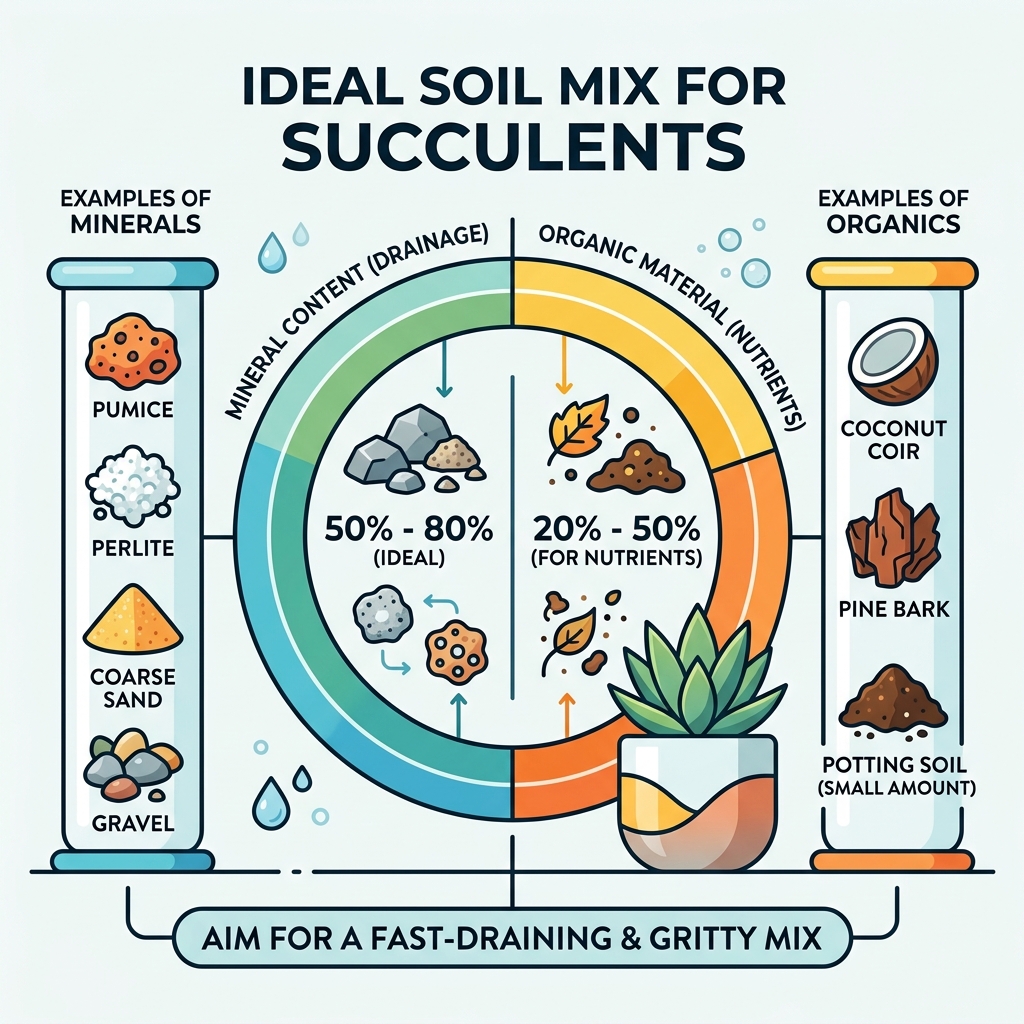
The best soil for succulents is a fast-draining, gritty mix with at least 50% mineral content — think pumice, coarse sand, or perlite — blended with a small amount of organic material like coconut coir or pine bark.
Quick answer: Top soil options for succulents
| Option | Best For | Mineral Content |
|---|---|---|
| Bonsai Jack Gritty Mix | Indoor growers, over-waterers | ~100% (soilless) |
| DIY 3:2:1 mix (potting soil : coarse sand : perlite) | Most succulents, beginners | ~50-60% |
| Pumice-heavy mix (80%+ pumice) | Haworthia, shade succulents | 80-90% |
| Sandy loam with gravel | Outdoor landscaping | 50-80% |
| Pre-mixed cactus soil + pumice | Quick fix for store-bought soil | Varies |
Succulents store water in their leaves and stems. That’s their superpower. But it also means their roots are extremely sensitive to sitting in wet soil. Leave them soggy for too long and root rot sets in fast — often before you even notice anything is wrong.
In their natural habitats — rocky hillsides in South Africa, sandy desert floors in Mexico, gravel-strewn crevices in California — succulents grow in soil that drains almost instantly after rain. Regular potting mix is designed to hold moisture. For most houseplants, that’s great. For succulents, it can be a death sentence.
The good news? Getting the soil right is simpler than it sounds. And once you do, these plants practically take care of themselves — perfect if you want beautiful, low-fuss greenery without constant upkeep.
What Makes the Best Soil for Succulents?
To find the best soil for succulents, we have to look at what’s happening beneath the surface. Succulent roots don’t just need water; they need oxygen. In the wild, these plants often grow in “low-humus” environments—places where there isn’t a lot of decaying leaf litter or rich, black dirt. Instead, they thrive in weathered, silty, or rocky substrates.
The magic word here is porosity. A porous soil has plenty of tiny air pockets. When you water the plant, the liquid should move through these pockets quickly, leaving the roots damp but never “drowning.” If the soil is too dense, those air pockets collapse, and the roots suffocate. This is why we aim for a mineral content of 40% to 80% by volume, depending on how humid your home is or how often you like to reach for the watering can.
Particle size is the secret sauce. For potted succulents, experts recommend screening your gritty materials to about 1/4 inch (6mm) in size. If the particles are too fine (like beach sand), they pack together and choke the roots. If they are the right size, they create a “gritty mix” that allows for maximum airflow.

Essential Ingredients for a Healthy Mix
When we go shopping for ingredients or look at labels, there are a few heavy hitters that make up the best soil for succulents:
- Pumice: This is arguably the “holy grail” of succulent amendments. Pumice is a volcanic rock filled with tiny pores that act as microscopic reservoirs. It holds onto just enough moisture and nutrients to feed the plant but dries out quickly. Unlike other materials, it doesn’t float to the top when you water.
- Perlite: Often called the “white popcorn” of the soil world, perlite is cheap and easy to find. It’s great for drainage, though it does have a habit of floating to the surface and can eventually crush into a fine powder.
- Coarse Silica Sand: Not all sand is created equal! We must avoid fine play sand or beach sand, which can actually turn your soil into something resembling concrete. Look for “horticultural sand” or “sharp sand.”
- Coconut Coir: A sustainable alternative to peat moss. Coir is made from coconut husks and is much easier to re-wet once it dries out.
- Pine Bark Fines: These provide a bit of organic structure and hold nutrients without becoming a soggy mess.
- Decomposed Granite (DG): Excellent for adding weight and minerals to a mix, especially for outdoor beds.
- Turface (or calcined clay): This is a high-fired clay that doesn’t break down. It’s often used on baseball fields to manage moisture, and it works wonders for preventing root rot.
What to avoid: We generally recommend staying away from heavy peat moss. While it’s common in big-box store mixes, peat becomes “hydrophobic” when it dries out—meaning it actually repels water, leaving your succulent thirsty even after a deep soak.
The Best Soil for Succulents Indoors
Growing succulents inside presents a unique challenge: lower airflow and slower evaporation. In a typical living room, the soil stays damp much longer than it would on a breezy patio. This is why the best soil for indoor succulents is usually much grittier than an outdoor mix.
If you struggle with those pesky fungus gnats, a “soilless” gritty mix is your best friend. These bugs need damp organic matter to survive; take away the “dirt,” and the gnats disappear. For those just starting out, following indoor succulent care tips for beginners usually involves switching to a mix that is at least 60-70% inorganic material. This provides a safety net if you accidentally water a bit too often.
DIY Succulent Soil Recipes and Ratios
There is something incredibly satisfying about mixing your own “dirt.” It’s a rite of passage for many plant parents, and it’s often cheaper than buying premium pre-mixed bags. The “Golden Ratio” we often recommend is a 2:1 inorganic to organic ratio.
The “Standard” DIY Mix:
- 3 parts quality potting soil (as the organic base)
- 2 parts coarse sand or chicken grit
- 1 part perlite or pumice
Once you’ve mixed it, perform the Squeeze Test. Grab a handful of slightly damp soil and squeeze it hard. When you let go, it should clump together for a second but fall apart easily if you poke it. If it stays in a hard ball, add more grit!
Customizing the Best Soil for Succulents by Species
Not every succulent wants the same “bed.” Some are thirstier than others, while some prefer to live in what looks like a pile of rocks.
- Haworthia Mix: These guys love their minerals. A mix of 85-90% pumice with just a splash of coir and decomposed granite is ideal. They appreciate the extra iron found in mineral-heavy soils.
- Euphorbia Mix: These are a bit more forgiving but still want high drainage. Aim for 75-80% pumice and 20% organic matter.
- Cacti (Desert Dwellers): True desert cacti want a very lean mix. A 1:1:1 ratio of soil, perlite, and grit ensures they never get “wet feet.”
- Mesembs (Living Stones): These are the ultimate mineral lovers. They can thrive in up to 90-100% inorganic grit.
- Epiphytes (Christmas Cactus): Unlike their desert cousins, these grow in trees! They actually want more organic matter and slightly more moisture retention.
Using nutrient-poor soil is actually a benefit for many species. It prevents “leggy” or stretched-out growth, keeping your plants compact and colorful, just like they appear in the wild.
Adjusting for Pot Type and Environment
Your choice of container also dictates the best soil for succulents. It’s all about how the pot “breathes.”
- Terra Cotta: These pots are porous and “wick” moisture away from the soil. If you use terra cotta, you can get away with a slightly more organic soil mix because the pot helps it dry out.
- Plastic or Ceramic: These hold onto water much longer. If you love the look of a glazed ceramic pot, make sure your soil is extra gritty to compensate.
- Drainage Holes: This is non-negotiable! Without a hole, water pools at the bottom, creating a “death zone” for roots. If you must use a pot without a hole, check out our guide on the best pot for indoor succulents for tips on how to manage it.
For outdoor landscaping, the rules change slightly. You aren’t limited by the walls of a pot. Many growers create “berms” or mounds of sandy loam and gravel to ensure rain runs off quickly. This mimics the natural slope of a hillside and keeps the crown of the plant dry.
Common Mistakes and Soil Maintenance
Even with the best soil for succulents, things can go wrong if we fall into a few common traps. One of the biggest myths is layering rocks at the bottom of a pot that has no drainage hole. Science tells us this actually creates a “perched water table,” which brings the water closer to the roots, not further away. It’s better to mix the grit throughout the entire pot.
Another mistake is reusing old soil from a plant that died of rot or pests. That soil could be harboring pathogens or larvae. When in doubt, start fresh!
Soil Maintenance and Refreshing
Soil doesn’t last forever. Over time, organic components break down and perlite can turn to dust, leading to soil compaction. This is when the soil becomes a hard brick that roots can’t penetrate.
We recommend refreshing your succulent soil every 2 years. This is also the perfect time to check for root-bound issues. If you’re nervous about the process, our repotting indoor succulents step-by-step guide will walk you through it safely.
While succulents aren’t heavy feeders, they do appreciate some nutrients during their active growth cycle (usually spring and summer). You can add a small amount of slow-release fertilizer or a diluted liquid cactus food once a month. Some growers even swear by biological additives like mycorrhizae to help the roots absorb minerals more efficiently.
Frequently Asked Questions about Succulent Soil
Can I use regular potting soil for succulents?
You can, but you shouldn’t use it straight out of the bag. Regular potting soil is designed to hold moisture for plants like ferns or pothos. If you have a bag of regular soil you want to use up, simply “cut” it by adding equal parts pumice or perlite. A 50/50 mix is the bare minimum for succulent success.
Why is my succulent soil staying wet for too long?
If your soil is still damp a week after watering, you likely have one of three problems: not enough grit in the mix, a pot without a drainage hole, or poor airflow in the room. Try moving the plant closer to a window or adding more pumice to the mix. Ideally, succulent soil should dry out within 1 to 3 days.
Does succulent soil need to be sterilized?
If you are making a DIY mix using ingredients from your backyard, yes, sterilization is a good idea to kill weed seeds and pathogens. However, if you are using high-quality bagged components like coir and horticultural pumice, they are generally clean and ready to use.
Conclusion
At Finance Foxx, we know that the secret to a “green thumb” is often just having the right foundation. Choosing or mixing the best soil for succulents is the single most important step you can take to ensure your cacti and Echeverias thrive for years to come. By focusing on drainage, mineral content, and the specific needs of your plant species, you turn a finicky hobby into a successful, low-stress garden.
Ready to take your plant game to the next level? Check out more info about succulent maintenance to keep your collection looking its best!
